platforms for end-to-end agent session forensics
Agent frameworks need forensics that catch what happens when everything looks fine.
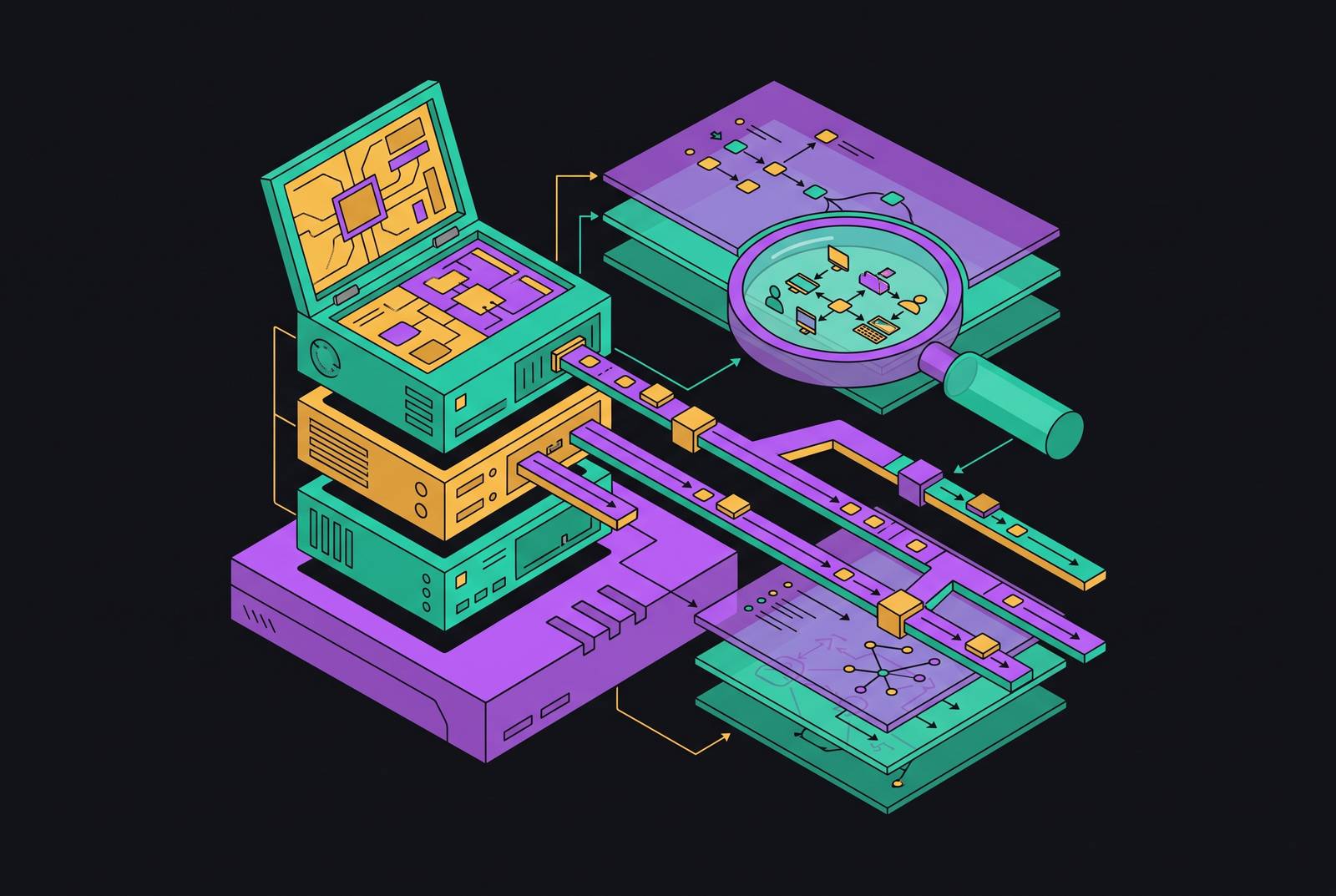
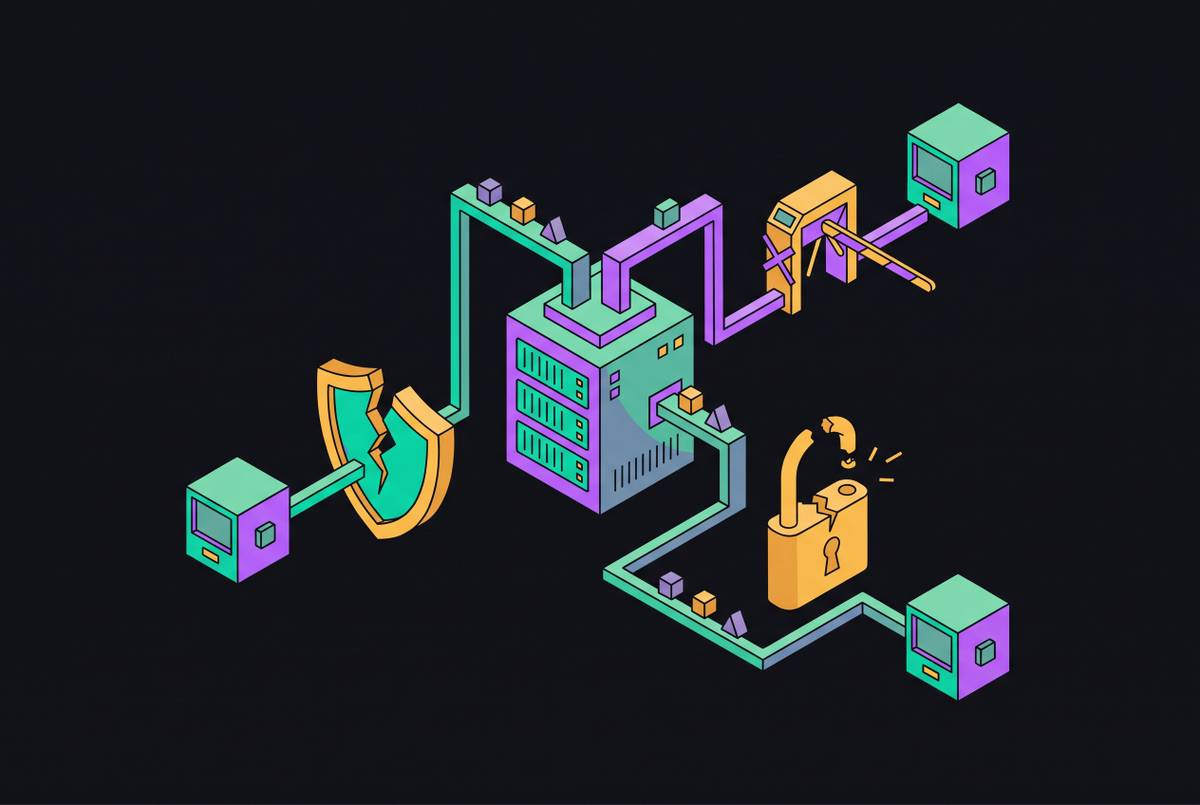
An AI agent can hit every green light on a dashboard, low latency, clean HTTP status, reasonable token spend, and still fail in a way that matters. It called the wrong tool. It pulled stale context from a retrieval step three hops back. It skipped an approval checkpoint that should have stopped it cold. Standard application monitoring was never built to catch that gap, and most teams are still leaning on it anyway.
Most agent frameworks route tool calls through MCP, the Model Context Protocol. How much forensic visibility a team gets into those calls depends heavily on which transport the MCP server runs, and that's not some minor plumbing detail. It's the foundation everything else sits on.
The MCP spec moved away from the older HTTP+SSE transport in favor of Streamable HTTP, starting with the March 2025 specification. Legacy HTTP+SSE was formally deprecated at that point (protocol version 2025-03-26), and a later spec dated July 28, 2026 established a subsequent migration window.
A year sounds generous until you look at what runs during it. Mixed environments, some servers still on HTTP+SSE, others already migrated, create exactly the kind of inconsistency forensic tools trip over. A trace that comes back clean against a Streamable HTTP server might come back thin or malformed against a legacy one, and nobody notices until an incident forces someone to dig through it.
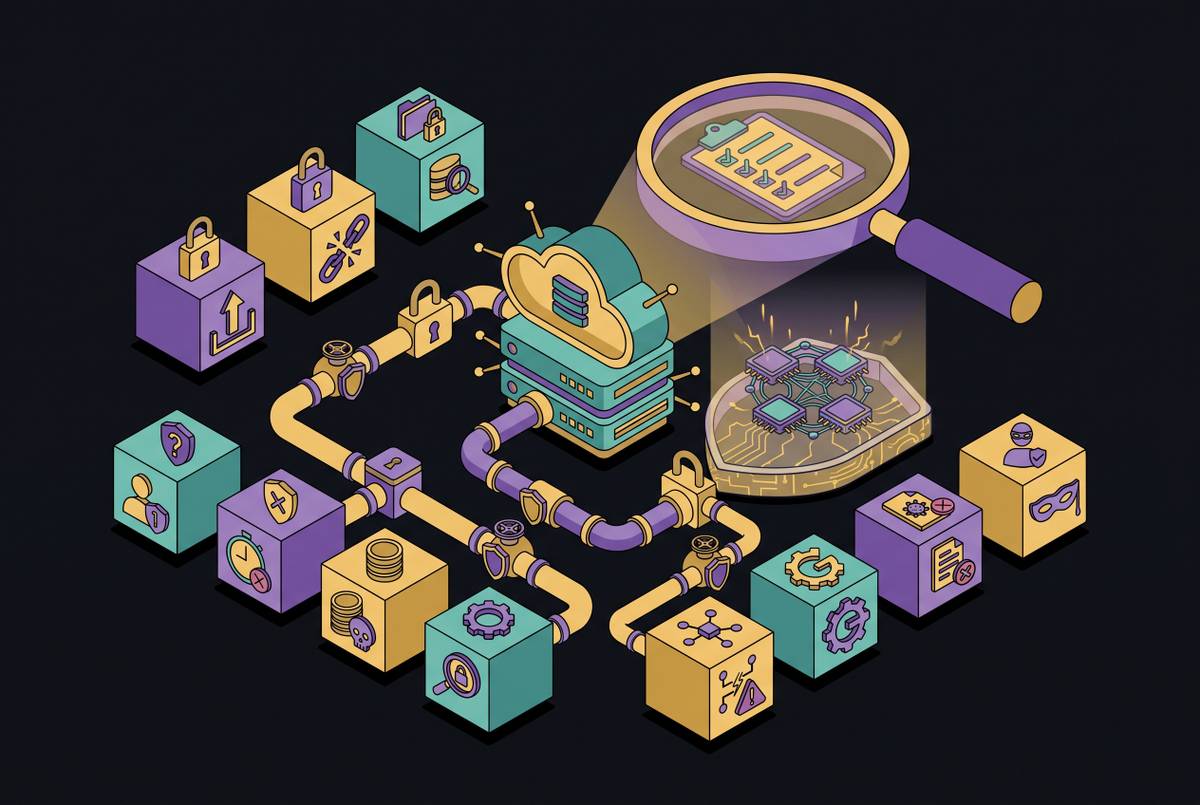
Then there's the shadow problem, and it's the bigger one. An unsanctioned MCP server spun up on a developer's laptop, or quietly running in a dev environment, sits completely outside gateway-level forensics unless something is watching at the endpoint too. A gateway can only account for what asks to pass through it. Anything that routes around it doesn't exist as far as that gateway's audit trail is concerned. Most teams grade their coverage by whether they have a gateway at all, and that's the wrong test: the right question is whether anything is running that the gateway never gets asked to see.
So a platform's real coverage is measured by more than a feature checklist. It's whether the transport layer underneath the agent has actually finished migrating, and whether every MCP server touching that environment is even known to exist in the first place.
Platforms built for agent-native tracing: Arize AX and Phoenix, Confident AI, and Langfuse
Arize AX and Phoenix cover a broad combined workflow here: tracing, production monitoring, experiments, and evaluation, with multi-framework support rather than locking into one. The same tracing approach is designed to work across multiple frameworks rather than requiring a specific one. And the platform doesn't just record what happened. It scores whether the output was actually correct, which is the part plain logging skips.
LangGraph and LangChain teams tend to gravitate toward LangSmith instead, which sits in similar territory but is built tightly around that one ecosystem. For teams that don't want to get locked into a single framework, Arize AX and Phoenix are the better call.
Langfuse is a strong option for teams that need to self-host, offering open-source LLM tracing with an evaluation layer on top, and self-hosting isn't just about cost control. For organizations where keeping session data within their own infrastructure is a priority, self-hosting addresses that need directly.
Here's the weak spot running through this whole tier: these tools are instrumentation-first. They work by assuming the agent framework cooperates and reports in. An agent or tool that never opted into the tracer just doesn't show up. No error, no flag, just silence where a trace should be. That silence is the dangerous part, because it looks identical to nothing happening at all.
Snowflake's Cortex AI Gateway, announced at Black Hat 2026, tries to close some of that gap by integrating Natoma, a centralized MCP gateway that enforces identity, policy, and audit at the level of individual tool calls. Its Observability and Tracing feature, currently in private preview, captures agent tool calls in real time, building an audit trail for usage tracking and troubleshooting rather than after-the-fact review. Agent Action Auditability, also in private preview, builds an end-to-end record of what systems an agent touched and in what order. Agent Identity, generally available now, enforces access policies tied to when an agent is active in a session, so agent-initiated actions get separated from human-initiated ones in the log instead of blurring together. The Govern Every Agent Connection feature, still in private preview, covers more than 100 MCP servers including bring-your-own and privately networked setups, with automatic discovery of shadow AI and unregistered MCP servers, which goes straight at the blind spot the transport migration creates.
The urgency behind this isn't abstract. Per the Linux Foundation's 2026 State of Tech Talent Report, AI security concerns jumped from 17% of organizations in 2024 to 48% in 2026. The same report found 97% of organizations committed to implementing AI, but 57% facing a real capacity gap in security and risk staffing. That gap is exactly why gateway-layer controls matter more than headcount: nobody is going to watch every agent connection by hand.
Tigera Lynx takes a different route, and it's the more complete one. It mediates LLM, MCP, and tool calls (agent-to-agent, agent-to-tool, agent-to-LLM) as they route through its Kubernetes gateway, but it doesn't stop at the gateway. It backs that up with eBPF-based discovery, watching at the kernel level for workloads that never opted into the gateway at all. That's the real differentiator: coverage that extends below the application layer. Traces come out in OpenTelemetry format across agent, tool, LLM, and MCP access policies, and because the monitoring runs at the process level, it can see activity even from a framework that was never instrumented to report anything.
Platforms oriented toward security governance and identity: Nightfall AI, Noma Security, and SailPoint Agent Identity Security
Nightfall AI focuses on shadow MCP detection: finding unsanctioned MCP servers running across managed developer devices, the exact blind spot gateway-only tools miss. That matters because those servers are invisible data exfiltration paths as far as traditional security tooling goes. Nightfall pairs that transport-layer discovery with monitoring of agent activity across the agentic AI surface, so coverage extends beyond what passes through MCP alone. The coverage model extends beyond agents that were formally declared to exist on an inventory list.
Noma Security takes an enterprise-wide approach to securing and governing AI systems and autonomous agents, rather than working agent by agent or framework by framework. That enterprise-wide framing is the whole point: governance that doesn't depend on every team independently deciding to opt in.
SailPoint's Agent Identity Security works from a fundamentally different angle. It aggregates AI agents across cloud platforms and applications, assigns ownership to each one, and enforces access reviews on an ongoing basis. That matters because an over-permissioned agent executing flawlessly is still a risk, just a quieter one. Its blast radius is bigger than it needs to be, and nobody notices until something goes wrong and the permissions turn out to be the actual story. The access review process creates an ongoing governance record of each agent's permissions, a layer that backs up action-level tracing instead of standing in for it.
The thread running through all three: forensics here is about authorization state, not just execution state. Knowing what the agent did matters less than knowing whether it was ever supposed to be able to do it in the first place.
Forensic behavior analytics: profiling expected agent behavior and detecting deviation
Behavior analytics in this space comes down to one move: build a profile of what an agent normally does, then watch continuously for deviation from that profile. Providers build detailed usage models per agent and flag anything that breaks pattern, whether that's compromised code, a policy violation, or an attempt to reach data the agent shouldn't touch.
Per-agent baselines matter because they let a system tell a benign outlier apart from a genuine threat, even as the agent's behavior legitimately shifts over time. An agent that starts calling a new tool isn't automatically suspicious if that tool was just added to its toolkit last week. A single global threshold can't make that distinction. A per-agent baseline can, and that's the whole argument for building one in the first place.
Investigation tools built into these platforms go further than flagging. They let a team link an anomaly back to a broader security incident, rebuild the full timeline of what the agent did, correlate events across multiple agents at once, and trace a suspicious pattern back to its root cause.
Baselines need time, though, and that's the catch nobody advertises. A brand-new agent, or one that just went through a major change, doesn't have enough history of normal behavior yet, so its baseline reads noisy. Alerts coming out of a noisy baseline need a human eye on the threshold, at least until the pattern settles down. Trust the baseline too early and every false positive costs an analyst's afternoon; trust it too late and a real deviation slides through as noise.
Where legacy endpoint forensics platforms intersect with agent session forensics
Fidelis Endpoint captures full sessions in real time: processes, files, registry changes, memory, all correlated automatically into a single timeline. It even pulls out in-memory malware that runs entirely in RAM and never touches disk. That's real forensic strength at the endpoint level, reconstructing process trees, file writes, and network connections down to the kernel.
But it doesn't reconstruct the logical decision chain happening inside the agent. Tool call arguments, what got retrieved and from where, the intermediate reasoning that led to a decision, a handoff to a sub-agent: none of that shows up as an endpoint event, because none of it is one.
Trellix EDR with Forensics has a similar profile. It automatically maps events in each alert to the MITRE ATT&CK framework, and it scored 100% in the 2024 ATT&CK Evaluations for macOS, a strong result by any measure. But the gap is the same one Fidelis has: the agent's internal reasoning simply isn't visible from where the endpoint sits.
Intezer AI SOC investigates every alert at forensic depth, combining endpoint forensics, reverse engineering, network artifact analysis, and sandboxing with its own agentic reasoning layer. It resolves most alerts on its own and escalates only a small fraction to a human analyst. When an AI agent's behavior triggers a security alert, that forensic depth applies fully to the resulting incident. Still, the agent session itself isn't the unit of analysis here. The alert is.
That's the pattern across all three: endpoint forensics platforms and agent session forensics platforms don't substitute for each other, no matter how good either one gets at its own job. Endpoint tools show what happened on the host once a decision got made. Agent session tools show why the decision got made in the first place. A team running only one of the two is missing half the picture, and it's the half most incident reviews actually need.
A few questions cut through any platform's coverage claim fast. Does it log retrieval steps with the actual content retrieved, the source, and a timestamp, or just a marker that a retrieval happened? Does it record approval checkpoints with who presented the gate and what was shown, or just a pass/fail flag? Does coverage reach agents and tools that never instrumented themselves, through a gateway or at the kernel level? Are MCP tool calls captured across both HTTP+SSE and Streamable HTTP during the current migration window, and are shadow MCP servers even discoverable at all?
On governance: is every agent action tied to a specific agent identity, separating agent-initiated from human-initiated entries in the log? Are an agent's permissions auditable, with a clear record of who approved them, when, and under what review cycle? And on quality: does the platform measure anomalies against a baseline built for that specific agent, or against one global threshold applied to everything? Those answers separate a platform that reconstructs the full decision chain from one that just watches the envelope around it.