Tracking Remediation Status Across a Pen Test Report in Engineering Workflows
Engineering teams need pen test findings routed into their actual workflows to verify fixes.
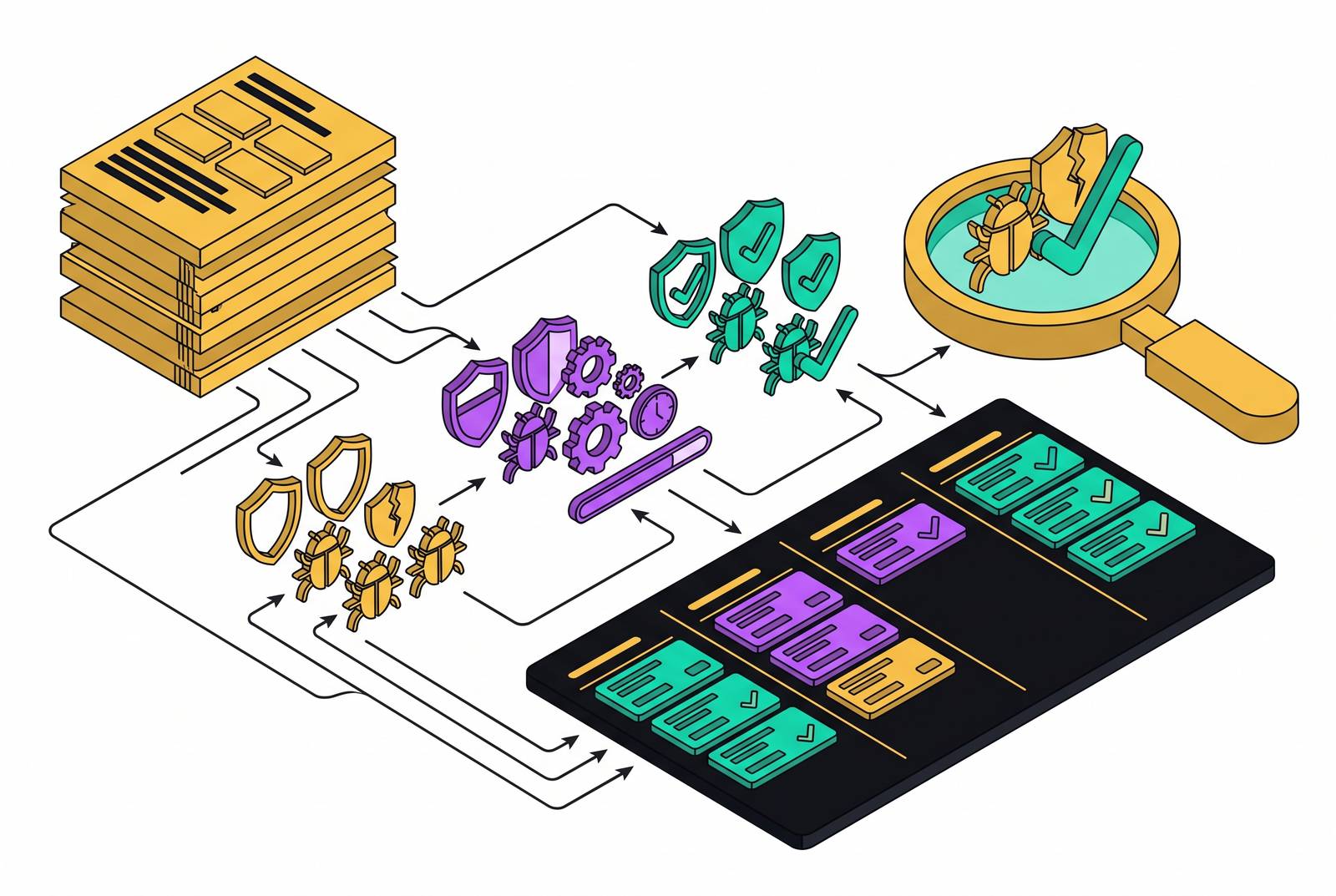
Tracking remediation status across a pen test report means taking every finding from identified to verified fixed, or to a written risk-acceptance decision. That work belongs in the tools engineers already use. A report describes the risk, but only a connected workflow can carry the findings through ownership, code changes, retesting, and a record that an auditor or customer can review.
Why pen test reports stall before a single fix lands
The report arrives in an email thread, gets saved to a shared drive, and has no named engineer, ticket, or due date attached to its findings. The handoff looks complete because the testing is finished. But engineering has no work item that someone has agreed to take on. The report is available, but availability is not ownership.
This is an organizational failure. Findings arrive in a static document, separate from the tools engineers use to plan and complete work. Inconsistent formatting makes triage slower and more error-prone. Even when someone applies a fix, the document has no built-in mechanism to confirm that the change removed the vulnerability.
Someone reads the report, a few critical items get patched, and the other findings grow old without closure or formal risk acceptance. What is missing is a defined path from the report to an engineer, and from that engineer’s change to a verified result.
How disconnected remediation tracking makes findings disappear
A spreadsheet kept apart from engineering work adds another place where someone has to copy who owns the work, update its status, and remember what comes next. Email adds discussion without necessarily adding an accepted task. A separate security portal creates the same gap when engineers have no reason to open it during their normal work.
Ownership ambiguity is the first consequence. A finding assigned to a team has no clear owner. “The backend team will handle it” does not establish which engineer has accepted the ticket or when the work is due. Without those commitments, the finding can sit in the spreadsheet where everyone can see it while no one works on it in the engineering queue.
Status drift is a different problem. A spreadsheet row marked “done” may mean that a change was deployed while retesting of the vulnerability remains unconfirmed. A row with no retest date leaves that distinction unresolved. Deployment and verification are separate events, and a disconnected status field does not enforce the step between them.
The handoff also strips away context. A ticket that says “fix XSS in search field” without the payload, affected endpoint, and session-theft scenario forces the engineer to investigate again. The report may contain all that evidence, but the task no longer carries it. As testing moves from annual to quarterly or continuous, more findings go through these manual handoffs, so the same gaps leave more work stuck in the queue.
What SOC 2 and other frameworks actually require from remediation tracking
Those gaps affect more than how smoothly engineering work gets done, because the tracking record is also compliance evidence. A pen test report shows what the assessment found. It does not, by itself, show that deficiencies reached the people responsible for corrective action or that management tracked their resolution.
SOC 2 CC4.2 requires timely evaluation and communication of internal control deficiencies to the parties responsible for corrective action. Its “Monitors Corrective Action” point of focus adds that management should track whether deficiencies are remedied on a timely basis. Tickets, owners, dates, closure evidence, and documented risk acceptance make that process reviewable.
HIPAA’s periodic technical and nontechnical evaluation standard, 45 CFR 164.308(a)(8), creates a related practical need for a record of follow-through. ISO 27001 Annex A 8.8, Management of Technical Vulnerabilities, requires organizations to check how exposed they are to identified vulnerabilities and take the right steps to address them. Documentation and audit logs of those actions are expected when putting the control into practice, though the control does not spell them out. A forgotten spreadsheet row does not demonstrate that appropriate action was taken.
Remediation tracking supplies evidence of how the organization handled known deficiencies. That evidence needs to distinguish a verified fix from a decision to accept risk, rather than treating both as an unexplained closed status. Neither SOC 2 CC4.2 nor ISO 27001 Annex A 8.8 says that the original pen tester must be the one to verify a fix.
Mapping severity and type to the right engineering queue
That record starts at intake, when a finding becomes a task for an engineer. Routing should follow a consistent, documented rule for team, priority, and channel. It should not depend on the pen tester’s intuition or the security lead’s judgment on a particular day. Severity sets urgency, while the finding’s type helps identify the team that can fix it.
Critical and high findings warrant immediate tickets in the primary engineering queue, with a named assignee and target date. Jira, Linear, and GitHub Issues are examples of where that work can live. Medium findings belong in the same queue under a defined SLA, rather than a vague instruction to address them in the next sprint. Low and informational findings can be batched, but each still needs a decision to fix, risk-accept, or defer with a review date.
Type then directs the work to the right owner. An SSRF vulnerability in an internal API belongs to the team that owns the service. Hardcoded secrets in a CI/CD pipeline belong to the platform or DevOps team. Infrastructure misconfigurations belong to whoever owns the cloud configuration, which may not be the application development team.
Once routed, the ticket must carry enough context for the engineer to act without repeating the investigation. That includes reproduction steps with the exact payload or request, along with evidence such as a screenshot, HTTP response, or proof-of-exploitation output. Remediation guidance should be equally specific, expanding “sanitize inputs” to guidance such as “use parameterized queries in the UserSearch method in auth/db.py”.
Integrating finding status directly into the tools engineers already use
A well-formed ticket is useful only if its status remains connected to the security record. Findings should arrive automatically in the tools engineers open every day, without someone having to copy them from a PDF by hand. A pen test platform or reporting workflow that pushes structured tickets into Jira, GitHub Issues, or equivalent tooling removes that transcription step.
Each ticket should carry a unique finding identifier that maps back to the original report. That identifier connects the engineering task to the security record so their statuses can stay synchronized.
The workflow needs explicit states, including Open, In Progress, In Review, Fixed, Retested and Closed, and Risk Accepted. Fixed means the change has been made. Retested and Closed means a retest confirmed that the fix held. A merged pull request is therefore not enough to remove a remediated finding from the active queue.
A link from the ticket to the specific pull request ties the record to the code. A reviewer can follow the finding to the fix, the code change, and the retest result. That chain supports a CC4.2 review or an ISO 27001 stage-two assessment without requiring the reviewer to reconstruct the work from separate conversations.
Risk acceptance needs the same discipline, even though it does not end in a code change. A finding that will not be fixed needs a named owner, written rationale, and review date. Leaving it open and forgotten is not an acceptance decision. An undisposed finding remains an audit liability regardless of severity.
Using continuous PR scanning to catch regressions before they reopen closed findings
Verified closure describes the result of a retest, and later code changes can undo the fix. A different engineer may refactor the parameterized query that closed a SQL injection finding without knowing its security significance. A new service may reuse an old configuration pattern and reintroduce a removed hardcoded secret.
The same gap appears when a fix is not carried into new code. An authorization check may close an IDOR finding on an existing endpoint but be absent from a new endpoint added three sprints later for the same resource type. The closed ticket records the earlier fix correctly. It does not, on its own, detect that the new endpoint repeats the weakness.
Continuous scanning on every pull request checks for vulnerabilities as part of the code-change workflow, without waiting for the next annual or quarterly pen test. For regressions it catches, that moves the response from a later testing engagement to the period before the pull request merges. The engineer is still in context, the diff is small, and downstream systems have not consumed the vulnerable code. That makes the problem cheaper to fix.
The scan results need to go into the same system that holds the original findings’ tickets and statuses. A vulnerability that was fixed and later reintroduced is a different audit event from one that was never fixed. The record must preserve that distinction rather than making the original closure appear unsupported. Connected scanning extends the evidence between testing engagements while keeping the history of remediation intact.
What a closed-loop remediation record looks like to an auditor and to a customer
The output of this workflow is a record that can be reviewed without interviewing everyone involved. It links the original finding to owners named in the record, status changes with dates, linked pull requests, and confirmation from a retest. Where the organization accepted risk instead, it records the rationale, owner, and scheduled review date. Every finding has a disposition or a clear active status.
For SOC 2 CC4.2 and ISO 27001 Annex A 8.8, that record makes evaluation and follow-through visible. Searchable, exportable evidence lets an auditor examine what happened without piecing together email threads.
Enterprise customers have a related question. Their security questionnaires increasingly ask what the pen test found and how the findings were remediated. A record showing that critical findings were closed within a defined SLA and verified by an independent tester answers that question more directly than the original PDF. This matters most in fintech, anti-fraud, and financial services, where enterprise buyers carry out security due diligence before they sign.
In a complete workflow, findings enter engineering ticketing automatically with their full context, and a named engineer accepts ownership. The engineer develops the fix and links the pull request to the ticket. The pen tester then retests the running system, and the ticket moves to Retested and Closed with the evidence attached. Risk-accepted findings reach a documented decision instead, and the resulting record can be exported for the audit package.
Continuous PR scanning feeds that same workflow between engagements, so detected regressions retain their connection to earlier findings. Engineering does not have to maintain a separate account of its work for security, and reviewers do not have to infer a fix from a merged pull request. The work and the evidence follow the same path. That is what turns a pen test report from a document about risk into a reviewable record of how the risk was handled.