Enterprise Vendor Security Questionnaires and Pen Test Evidence
Pen test reports decide enterprise deals when scope, recency, and remediation evidence align.
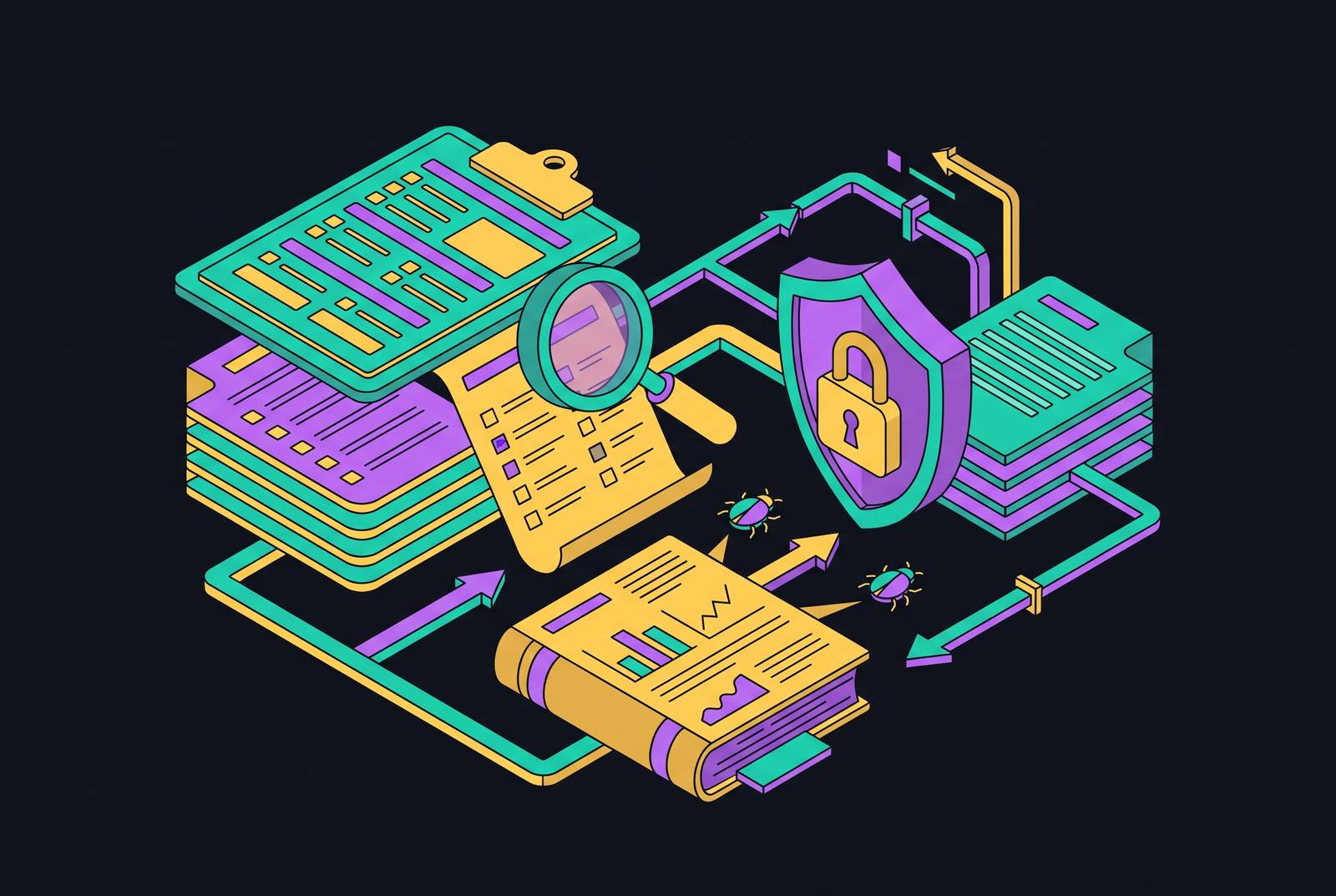
Enterprise vendor security questionnaires put the evidence from a penetration test under a hard light. A report passes because it is current, complete, and credible. The difference matters at the point of sale, when procurement needs proof that someone tested the systems carrying the buyer’s data and that serious findings were fixed.
Why the pen test report has become the decisive artifact in enterprise procurement
Commercial terms are agreed, the deal is days from closing, and then a lengthy security questionnaire arrives. The deadline is ten business days, and a current pen test report is required. This is a standard enterprise procurement gate. The commercial agreement does not remove the need to pass it.
The buyer usually also asks for a SOC 2 Type II report or ISO 27001 certificate, policy documents, and a signed data processing agreement. Questionnaire answers and policies say what the vendor claims to do, while a SOC 2 auditor checks controls. The pen test report shows what happened when someone tried to break into the system. That makes its date, coverage, and findings harder to explain away than an incomplete questionnaire answer.
What procurement reviewers actually look at when they open a pen test report
Reviewers first establish whether the report is recent enough and covers the right systems. Most treat a report older than twelve months as equivalent to no report, while some financial-services and high-scrutiny buyers require testing within six months. Scope must follow the buyer’s data through the system. A test of a marketing website does not cover data that flows through an API and cloud infrastructure. Mismatched scope is missing evidence, even when the testing itself was thorough.
Reviewers then look for findings scored with CVSS or an equivalent standardized scale. They also examine whether the methodology documents automated and manual testing and maps coverage to the systems under review. Recognized methods include OWASP, PTES, and NIST SP 800-115, while MITRE ATT&CK provides a threat-intelligence framework. Tool names alone do not explain the method. Finally, reviewers check whether the testers were independent, because a test by the vendor’s own team counts for much less than an independent third-party assessment. Failure on any of these checks can stall the deal regardless of the wider security program.
Where most pen test reports fail the review — and why staleness is the leading cause
Staleness leads because annual testing and procurement deadlines run on different clocks. A report can meet an internal schedule yet already be too old when a buyer requests it. These gaps recur because vendors treat the report as an internal security document and turn it into sales evidence only under deadline pressure. That leaves no room to correct the date or scope before submission. A narrow IP range or single application cannot stand in for multiple services and an API layer.
A current, well-scoped report still opens a follow-up round if critical and high findings lack confirmation that the fixes worked. Acknowledging a vulnerability is not the same as closing it. The reviewer needs the testing team’s confirmation that remediation is complete.
The rest of the package can undermine an otherwise useful report. SOC 2 Type I describes control design at a point in time, so it cannot substitute for Type II evidence of operating effectiveness over time. Submitting it as equivalent triggers clarification and often a multi-month delay. Contradictions between questionnaire answers and attached documents create further follow-up rounds, where deals die. To pass, the attached report must give a clear, consistent record of testing and remediation as well as have the right name.
What separates a report that passes scrutiny from one that reads as compliance theater
A scanner report can look substantial without showing that anyone tested an attack path. Its familiar pattern is an automated scan against a production IP range, a CVE list with CVSS scores, generic remediation, and no retest. Business context is absent, so a vulnerability in a payment service receives the same treatment as one in a marketing microsite. Such a document may satisfy an auditor who accepts it at face value. It does not establish what a human could accomplish against the system.
A documented attack chain supplies that missing evidence. A “Path to Compromise” starts at a specific entry point, moves through findings in sequence, and reaches a specific business-impact objective. It shows how weaknesses work together and how low-severity findings can form a critical attack path. If the narrative reads like a generic playbook with the company name replaced, it describes discovery. A working exploit with collected evidence has a different evidentiary weight from an unverified potential vulnerability.
Experienced human testers have near-zero false positives because they base their findings on exploitation attempts or observations they have checked. When nobody checks automated output, including AI output, its false positives end up in the evidence package. Once a reviewer identifies an unverified finding, confidence in the rest drops. The dividing line is not compliance work versus traditional testing, because either can involve manual exploitation and creative chaining. The dividing line is whether the engagement was scoped and executed to test discovered weaknesses.
How compliance frameworks — SOC 2, ISO 27001, and HIPAA — set the floor for what reviewers expect
Buyers ask for reports that meet their own obligations as well as their standards for report quality. The AICPA does not explicitly mandate penetration testing, but CC4.1 names it as an example of a “separate evaluation,” making it a de facto standard for audit evidence. For SOC 2 Type II, the test generally must fall within the audit observation period. An auditor may accept a test completed shortly before that period, but a test outside it generally does not satisfy the criterion. A buyer working under CC9.2 needs proof that its suppliers were assessed, so its reviewer checks whether the report meets what the audit calls for.
ISO/IEC 27001:2022 is the only valid version following the October 31, 2025 transition deadline. ISO 27001:2013 certifications have expired, so presenting one means presenting an expired document. Under the 2022 standard, Control 8.8 requires timely identification and remediation of technical vulnerabilities. Control 8.29 requires security testing processes that are set out and put to use within the development life cycle. These controls make evidence of vulnerability management and security testing relevant to the buyer’s review.
The current Evaluation Standard requires periodic technical and nontechnical evaluation. The HHS OCR fact sheet describes a proposed rule that would expressly require penetration testing for covered entities and business associates. The correct posture is preparing for a requirement that is coming but not yet in force, rather than presenting the proposal as an existing mandate. More broadly, a request for recent testing may serve the buyer’s SOC 2 CC9.2 or DORA Article 28 obligation. Naming the relevant framework and explaining how coverage addresses it answers more than attaching a document does.
Questions to ask a pen testing vendor before signing — and red flags that end the conversation
The buying conversation determines much of the final report’s quality. Ask for the percentage breakdown of the engagement between manual testing and automated scanning, along with a description of the manual work. A specific ratio and description answer the question, while a list of tools does not. Ask how quickly critical vulnerabilities will be communicated during testing. Finding a critical issue on day three and withholding it until a report arrives two weeks later leaves the customer waiting on information needed for remediation.
Ask whether retesting is included, whether it covers all findings, and whether access has a time limit. Good providers include help with remediation and set out the retest window between when they deliver the report and when they close the engagement. Ask for a sanitized sample report before committing, because refusal leaves the deliverable unseen. Treat per-IP or per-page automated-scan pricing as a stop sign, since real manual testing does not scale linearly per IP. A methodology that names only Burp, Nmap, and Metasploit is another reason to stop, because tools do not establish testing coverage or a recognized method.
A timeline under five business days for a non-trivial scope is also a red flag. Three days for a medium SaaS application plus API points to scanning or perfunctory testing. A guaranteed clean report ends the conversation because the result has been promised before the work. Finally, establish whether the engagement includes whitebox access to source code repositories, cloud configurations, and product documentation. That access expands testing beyond what is visible from outside to what is actually present across the system, which changes what a complete report can demonstrate.
What a pen test report needs to contain to close an enterprise deal rather than stall one
The final report must satisfy currency, completeness, and credibility together. It needs testing within the last twelve months against the current production system, or within the shorter window the buyer requires. Its scope must be precise enough for a reviewer to identify the systems relevant to the buyer’s data. Every finding needs a CVSS score, a mapping to the affected attack surface component, and evidence of exploitation or a verified observation.
The report also needs at least one Path to Compromise showing how findings combined to reach a business-impact objective. That narrative belongs with a methodology mapped to recognized standards and retest confirmation for every critical and high finding. Together, these elements show what was tested, what the tester accomplished, and what the testing team later confirmed was fixed. Findings should also be organized to map to the buyer’s compliance framework. Formatting a report for two frameworks, such as SOC 2 plus ISO 27001, can meet both sets of evidence needs in one document and avoid a second request.
A letter of attestation from an OSCP or equivalent certified reviewer adds accountable human review. The reviewer should have examined and signed off on every finding. For AI-assisted testing, this human review is especially important because it makes the evidence more credible than unsigned automated output. On-demand retest access also matters after delivery, because later findings should not require scheduling a new engagement before fixes can be tested. A dedicated channel for collaboration with the testing team shortens the path from remediation to deal close.
Building the evidence package before the questionnaire arrives
Annual point-in-time testing produces evidence that is freshest in the first few months and grows progressively stale. When a report is close to the twelve-month limit, a delay in scheduling can make it too old to use. Scanning every pull request complements annual testing by evaluating code changes continuously. It supports security between tests and supplies evidence of ongoing practice.
An always-ready package keeps the pen test report within the previous six to nine months, refreshing it before it reaches eleven. The package should also hold the retest documentation and a SOC 2 Type II report from within the current observation period. The access control policy, incident response plan, and data processing agreement should also be ready to share. Questionnaire answers can be pre-mapped to SIG, CAIQ, and HECVAT ahead of the deadline. The aim is a complete, consistent submission that does not create its own follow-up work.
Responding to a ten-business-day request within two days signals that security evidence is maintained as part of operations. For a SIG questionnaire, naming the format, mapping answers to its sections, and explaining the obligations addressed makes that readiness visible. The report then does its commercial job because the security work behind it is current, complete, and credible before procurement ever asks.