Annual Pen Test vs Continuous Security Testing Cadence Decisions
A single annual pen test leaves 70 percent of your attack surface untested between engagements.
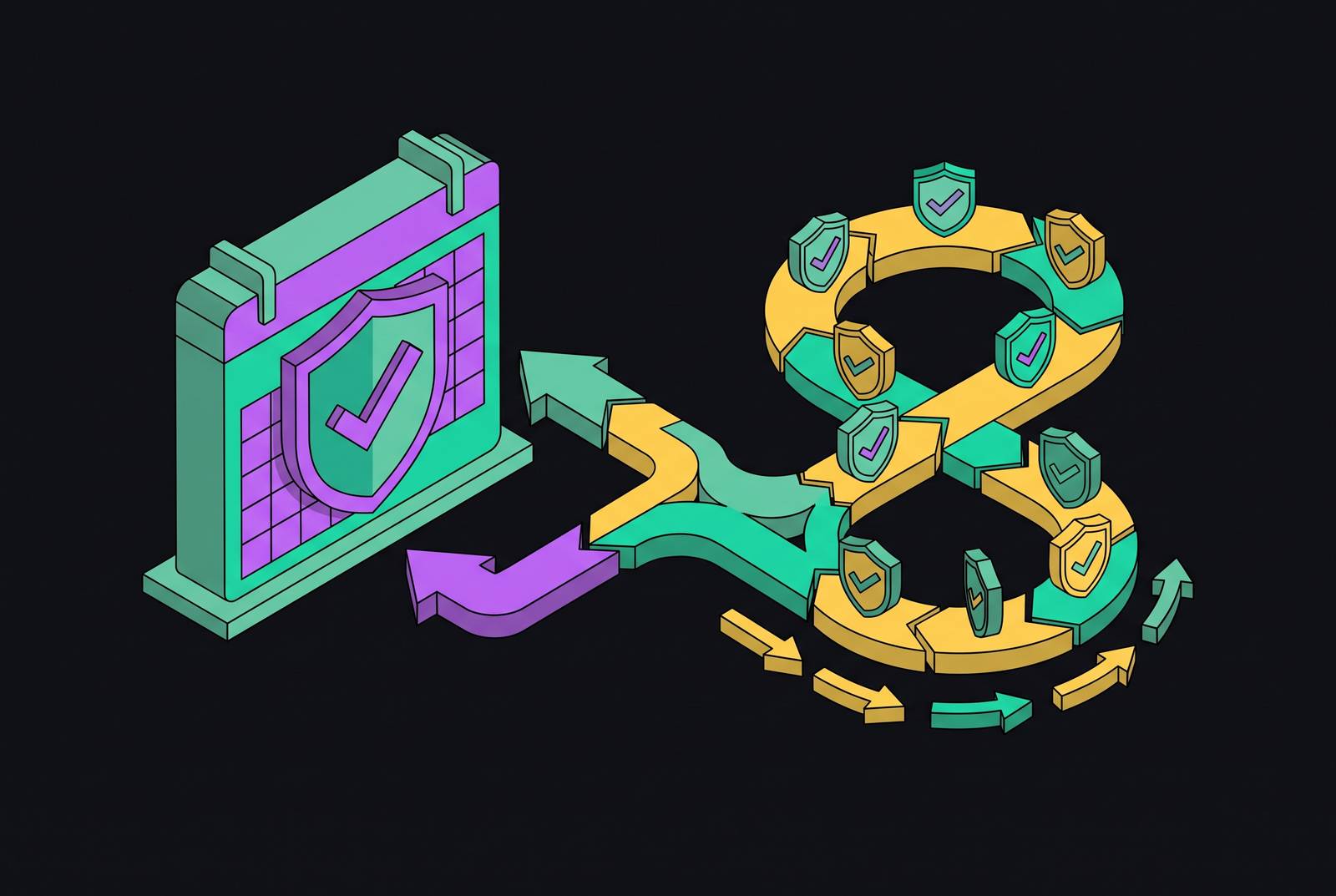
Organizations average around 1,100 infrastructure changes per month that touch their security posture, according to the Axonius State of Assets Report. Firewall rule edits, new cloud workloads spinning up, identity provider updates, new SaaS integrations, certificate rotations: all of that falls into the count. Each category opens a different slice of attack surface, and a pen test run last quarter has no way to account for any of it.
Attack surface includes cloud configuration drift, third-party API connections nobody remembers approving, new user roles with permissions nobody checked, and CI/CD pipeline exposure that grows every time a new build tool gets added. Whitebox access, meaning access to source code, cloud configs, and internal docs, gives a tester sight of all of this at once. Blackbox testing sees only what an outsider can poke at from the edge, and only at a single moment in time. Rely on blackbox alone and you're testing a small, visible slice of the attack surface and hoping the rest holds.
Before picking a cadence, count how many of these change categories actually apply. A company with stable infrastructure and slow release cycles sits in a low-change environment, while a company shipping weekly or daily across multiple clouds, with an API surface that keeps growing, sits in a high-change one. It is common to find two companies in exactly that split running the identical quarterly schedule: the slow-moving one over-tested, the fast-moving one under-tested, and neither team having actually sat down to ask why the calendar looked the way it did. Habit, not decision, is usually the reason, and habit is a bad reason to leave half the attack surface unwatched.
The coverage gap a point-in-time test leaves open
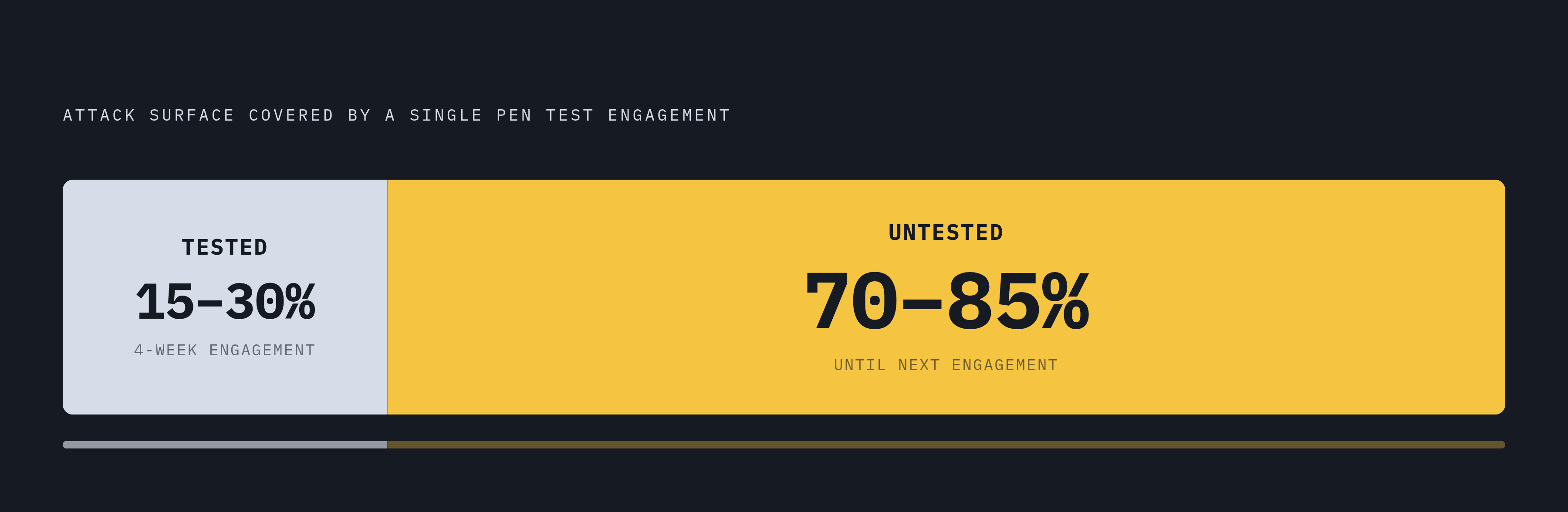
A typical four-week pen test covers somewhere between 15% and 30% of an organization's attack surface. That means 70% to 85% stays untested until the next engagement rolls around, a stat that warrants a second look before it lands. That's most of the house left unchecked, and it's worth sitting with that number before moving on.
The gap reflects what a single engagement is built to do, and what it isn't. Manual expert testing is uniquely good at finding business logic flaws, chaining smaller issues into a real attack path, and reasoning through a route no scanner would ever flag. Covering a large, constantly shifting surface at scale takes automated checks running continuously alongside the human testers, not instead of them, which is the problem Trace was built to solve.
Then there's the discovery-window problem. If vulnerabilities show up roughly evenly across the year, a once-annual test finds the average one after it's already been sitting exposed for around six months, according to research from Praetorian. In a fast-moving environment, the newest code, often the riskiest because it's the least battle-tested, ends up exposed the longest before anyone checks it. Sitting with that math for a minute, the uncomfortable part isn't the six-month average, it's that the newest, least-tested code is systematically the most likely to fall into the long tail of that window. Annual tests still belong in the mix, but they can't carry it alone, and any company betting its whole posture on one report a year is making a bet the numbers don't support.
What continuous security testing actually means (and what it does not replace)
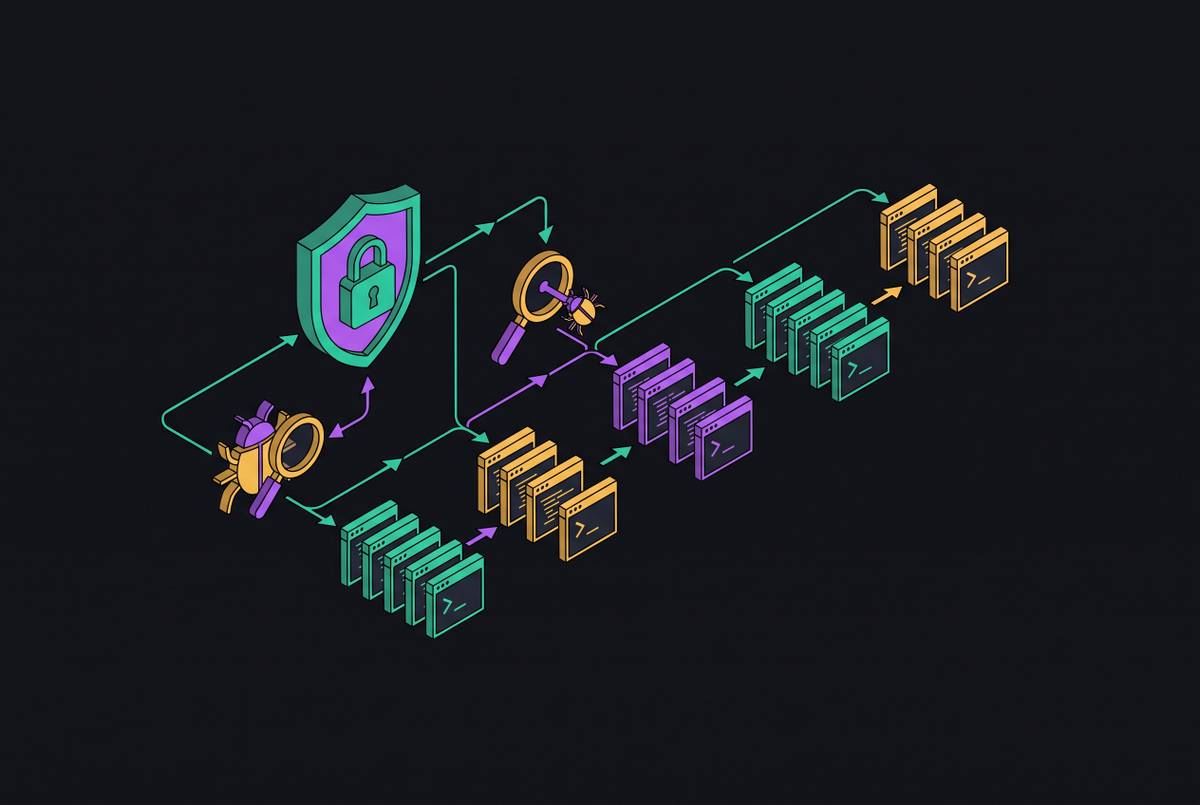
"Continuous security testing" gets tossed around like it's one thing, but it's a category, and the activities inside it do different jobs. Automated vulnerability scanning runs on a recurring schedule, daily or weekly. DAST and SAST tooling gets wired into CI/CD, scanning every pull request before it merges. Continuous control validation platforms check whether a known attack path is still exploitable after a patch. PTaaS, penetration testing as a service, delivers recurring human-led testing on a subscription model, and it's the fastest-growing piece of this market, expanding at a 29.1% compound annual growth rate.
Automated tools are fast at what they do: catching known vulnerability patterns, flagging regressions, confirming a patch actually holds, catching configuration drift the moment it happens. Chaining individual findings into a real attack story, reasoning through business logic, and producing a finding a human has actually verified by exploiting it, takes a manual tester. No scanner does this part, and none is close to doing it.
A scanner alert and a penetration test finding are different artifacts, built from different processes. The actual difference is clear when you place them side by side: one flags a pattern, the other proves impact. Auditors, customers, and cyber insurers are getting sharper about telling the two apart, and anyone still handing over a Nessus export and calling it a pen test report is going to get called on it eventually. Continuous testing stretches coverage across the gaps between manual engagements; pull-request scanning catches the regression the moment it's written. It takes a person to reason across the whole attack surface and find the thing nobody thought to check.
How remediation load changes depending on testing cadence
Annual testing has a side effect nobody talks about enough: it creates a remediation spike. Every finding lands at once, in a single report, and suddenly a dev team is making dozens of prioritization calls on top of whatever feature work was already planned for that sprint. Lower-priority findings sit in the backlog for months, and even critical ones end up waiting behind other critical ones, simply because there are too many to fix at once.
More frequent testing spreads that load out. A team might see three to five findings per cycle, arriving in smaller batches that fit into normal sprint planning, and a critical issue gets assigned the day it's found, not the day the annual report finally lands on someone's desk.
A team's actual capacity to fix things should shape the cadence decision, not sit as an afterthought to it. A small engineering team can genuinely end up worse off with a full-scope quarterly pen test than with a tighter annual test paired with lightweight continuous scanning, simply because the quarterly model produces more findings than the team can act on. That's counterintuitive on first pass — more testing sounds strictly better — but the math only works if remediation capacity scales with it, and for a small team it usually doesn't. The real question is how much remediation a team can absorb between engagements. Pick the wrong cadence and you get a backlog nobody clears, which is worse than testing less often in the first place.
Retesting belongs in this conversation too. A cadence plan that only finds vulnerabilities and never checks the fix isn't finished. On-demand retesting after each remediation cycle closes that loop, and annual-only models usually can't offer that kind of turnaround in any reasonable timeframe, since the next scheduled test might be eleven months out.
What compliance frameworks actually require (and where they leave room for judgment)
SOC 2 doesn't explicitly require pen testing in its text, but auditors expect it anyway, as proof controls hold up under real conditions rather than just existing on paper. Findings get mapped against the five Trust Service Criteria, and auditors increasingly want to see ongoing checks, not a single report from thirteen months back. Gray-box testing is usually the right fit for SOC 2 scope, run at least annually or after any major architectural change.
HIPAA requirements around technical safeguards continue to evolve, and auditors increasingly expect qualified human-led penetration testing rather than automated scanning alone as evidence that controls hold up under real conditions.
ISO 27001 doesn't name pen testing directly either, but Annex A Control 8.8, covering management of technical vulnerabilities, along with the standard's whole emphasis on continuous improvement, makes recurring testing the obvious way to satisfy it. The 2022 revision leans harder into risk-based thinking, which strengthens the case for tying cadence to actual changes in risk instead of a fixed date on the calendar.
PCI DSS 4.0 pushed further still, adding requirements for more frequent testing and ongoing monitoring beyond what earlier versions demanded. Cyber insurers have started tightening underwriting on their own terms too: policies above certain coverage thresholds now require proof of annual pen testing by a qualified human tester, a bar no scan report clears on its own.
Say it plainly: compliance frameworks set a floor, not a ceiling. Meeting the minimum and actually being secure are two different outcomes, and treating them as the same thing is how companies end up compliant and still breached. A pen test done right satisfies the auditor and the real threat model at the same time; a test built only to check the compliance box tends to satisfy neither one particularly well.
A framework for choosing your testing cadence based on how your product actually changes
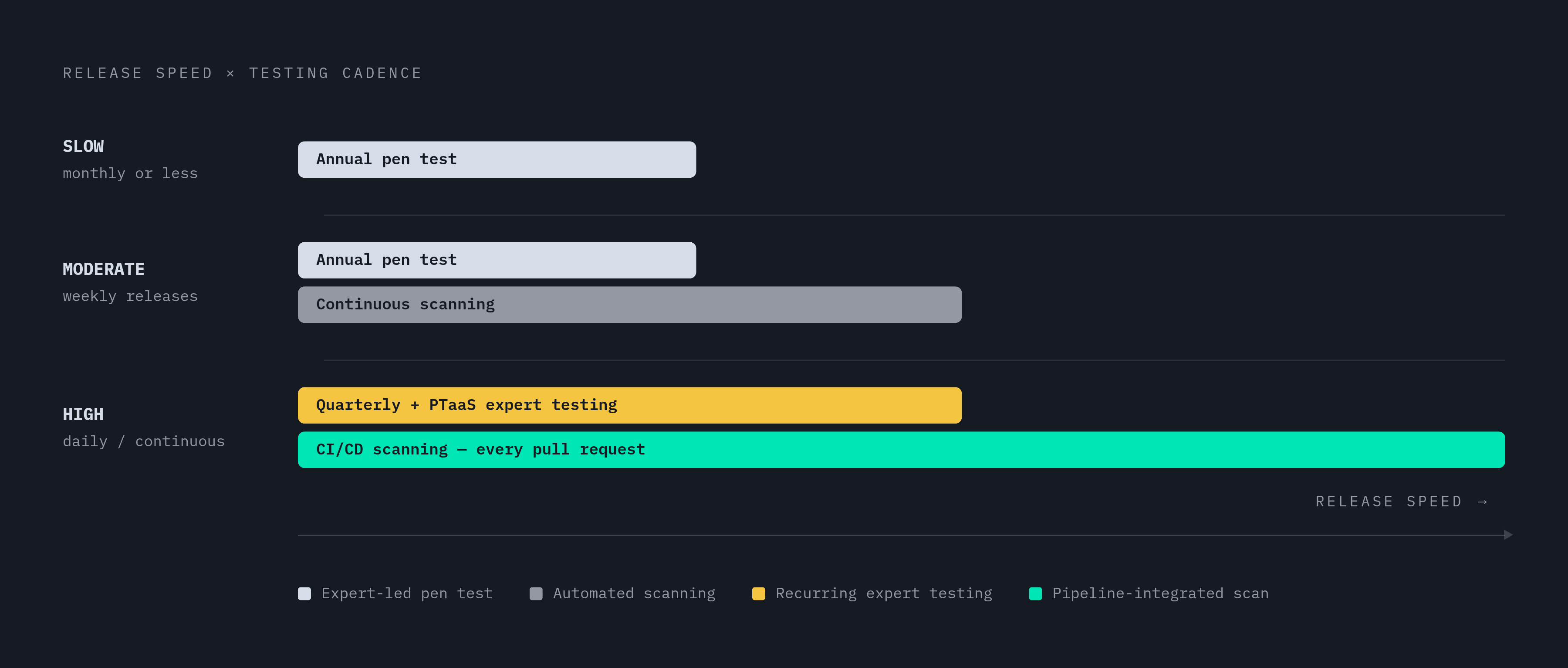
Release speed is the main variable. The question to ask is simple: how often does new code and infrastructure actually reach production?
Slow releases, monthly or less often with stable infrastructure, can reasonably run on an annual expert-led pen test with retests after any major release. Moderate speed, weekly releases with some ongoing cloud infrastructure change, calls for that same annual test plus lightweight continuous scanning filling the gaps in between. High speed, daily or continuous deployment with an API surface still expanding and infrastructure spread across multiple clouds, needs recurring expert-led testing on a quarterly or PTaaS basis, backed by pull-request-level scanning built into CI/CD.
Most companies that get burned are running high-speed infrastructure on a low-speed testing schedule; they don't notice the mismatch until something breaks, and by then the finding that would have caught it is six months stale. That's the trap worth naming directly: matching cadence to company size or budget instead of to how fast the product actually ships.
A few things push cadence upward no matter what the release calendar says. A new authentication system, a shift to microservices, a move to a new cloud provider: each one resets a meaningful chunk of the attack surface and deserves its own look, on its own timeline. The same goes for acquiring or integrating a third-party service, since that hands over inherited attack surface nobody's tested under this company's threat model. Entering a new compliance scope, whether that's a first SOC 2 Type II cycle, a new HIPAA business associate agreement, or bringing systems into PCI DSS scope, is its own trigger. So is a jump in data sensitivity, like landing an enterprise deal that puts a new customer's data on a system that's never been tested at that level of scrutiny.
The layered model wins here: an annual, or more frequent, expert-led pen test as the independent assurance layer, the artifact that actually satisfies auditors, customers, and insurers, paired with continuous scanning and pull-request testing as the operational layer catching regressions and new issues in between. These two layers solve different problems, and cadence decisions should treat them that way instead of pitting them against each other for the same line in the budget. Whichever cadence gets chosen, whitebox access is what makes the expert-led test worth paying for. Source code, cloud configs, and documentation let a tester map every path in rather than guess from outside; blackbox testing at any frequency still leaves the internal attack surface a mystery.
What to look for in a testing partner when cadence involves ongoing collaboration
Moving to a recurring or continuous model changes the relationship with a testing vendor. A one-time engagement is a transaction, while an ongoing one is closer to a partnership, and it's worth vetting like one.
A few questions cut through the sales pitch fast. Ask how retesting works after remediation: is it included, scheduled on request, or a separate line item? A vendor with no retesting policy isn't invested in the outcome, only the report. Ask who specifically will run the test and what certifications they hold; strong firms name their testers, weaker ones gesture vaguely at "our certified team." Certifications like OSCP, OSWE, and GXPN matter because they require demonstrated exploitation skill, not a multiple-choice exam. Ask what percentage of the engagement is manual versus automated. A vendor who answers by listing tool names, Nessus, Qualys, an automated Burp scan, with no manual methodology described, is probably leaning on scanners and calling it a pen test. Ask to see a sample report from a similar engagement too: does it include reproduction steps, business context, real severity ratings, and remediation guidance someone could actually act on, or does it read like reformatted scanner output?
A few red flags matter more in ongoing or PTaaS relationships specifically. A flat-fee quote with no scoping call is one; underscoped tests miss the assets that matter, and overscoped ones burn budget on things that don't. A missing communication channel for findings is another, since a continuous model needs a way to escalate a critical finding the moment it's found, not bundle it into a quarterly summary. And findings backed only by scanner output, with no working proof of exploit, leave remediation teams guessing at real impact. They satisfy nobody, least of all an auditor asking for proof.
Worth some context here: consulting engagements still make up the largest share of pen testing revenue, 52.3% in 2024, but PTaaS is growing at that 29.1% CAGR because buyers want real-time dashboards, ticketing hooked into their existing systems, and automatic retesting once a patch ships. That growth reflects genuine demand for a continuous model, but it doesn't guarantee every vendor riding that growth is delivering real manual testing behind the dashboard, so the questions above still apply no matter which delivery model a vendor is selling.
Turning cadence from a calendar decision into an engineering practice
The goal is making security testing as continuous as everything else in the engineering process, folded into the regular rhythm of releases rather than confined to a once-a-year event that interrupts the roadmap and disappears for eleven months.
A few integration points make that real. Pull-request scanning runs automated checks on every PR before it merges, catching known vulnerability patterns without stalling the pipeline. Post-release triggers define in advance which kinds of changes, a new auth flow, a new data store, a new external API integration, automatically kick off a targeted retest instead of waiting for the next scheduled cycle. The annual expert-led test itself should land its report before audit season starts, not after; the report works as an audit artifact, and timing it wrong defeats the purpose entirely.
Done right, this looks like an annual, or more frequent, expert-led whitebox pen test producing a signed report that satisfies auditors and insurers, running alongside continuous scanning and pull-request testing that catch what happens in the gaps between. Each layer covers what the other one can't, and the cadence isn't a date circled on a calendar. It reflects how fast the product actually moves, and it should change exactly as often as the product does.