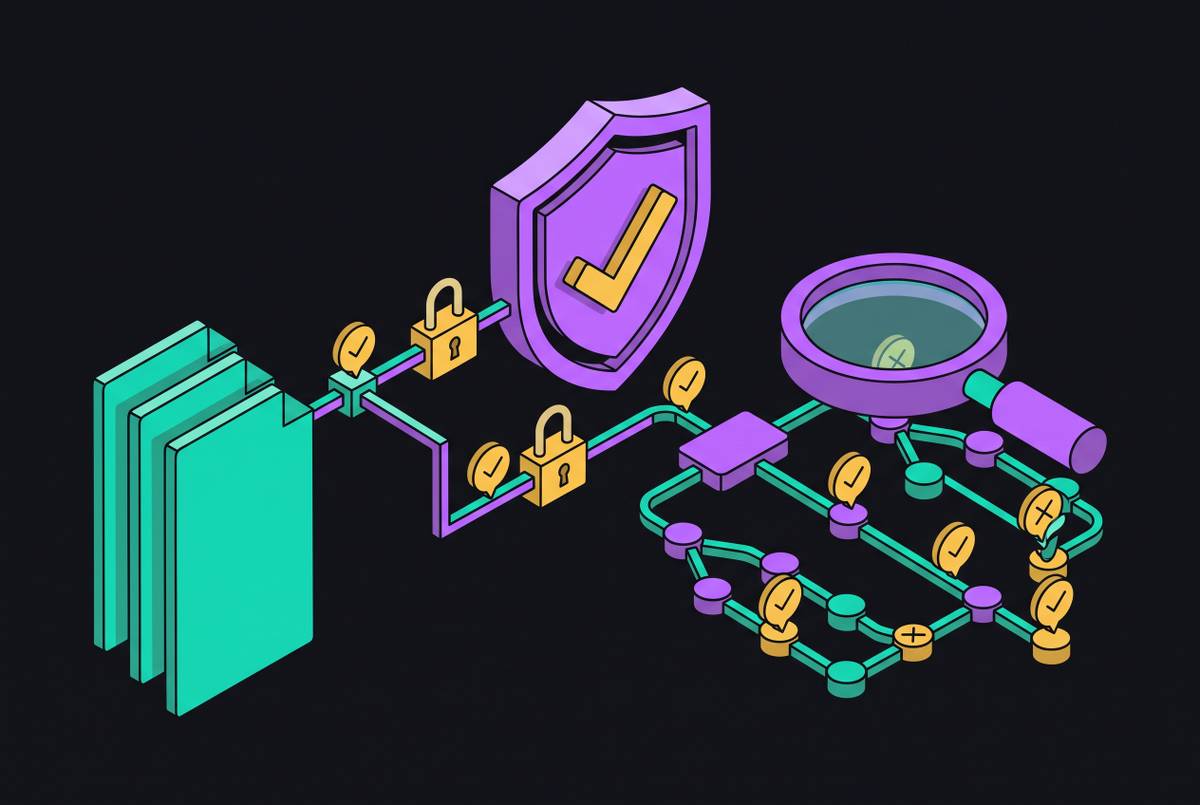
Shifting Left on Penetration Testing in the Software Development Lifecycle
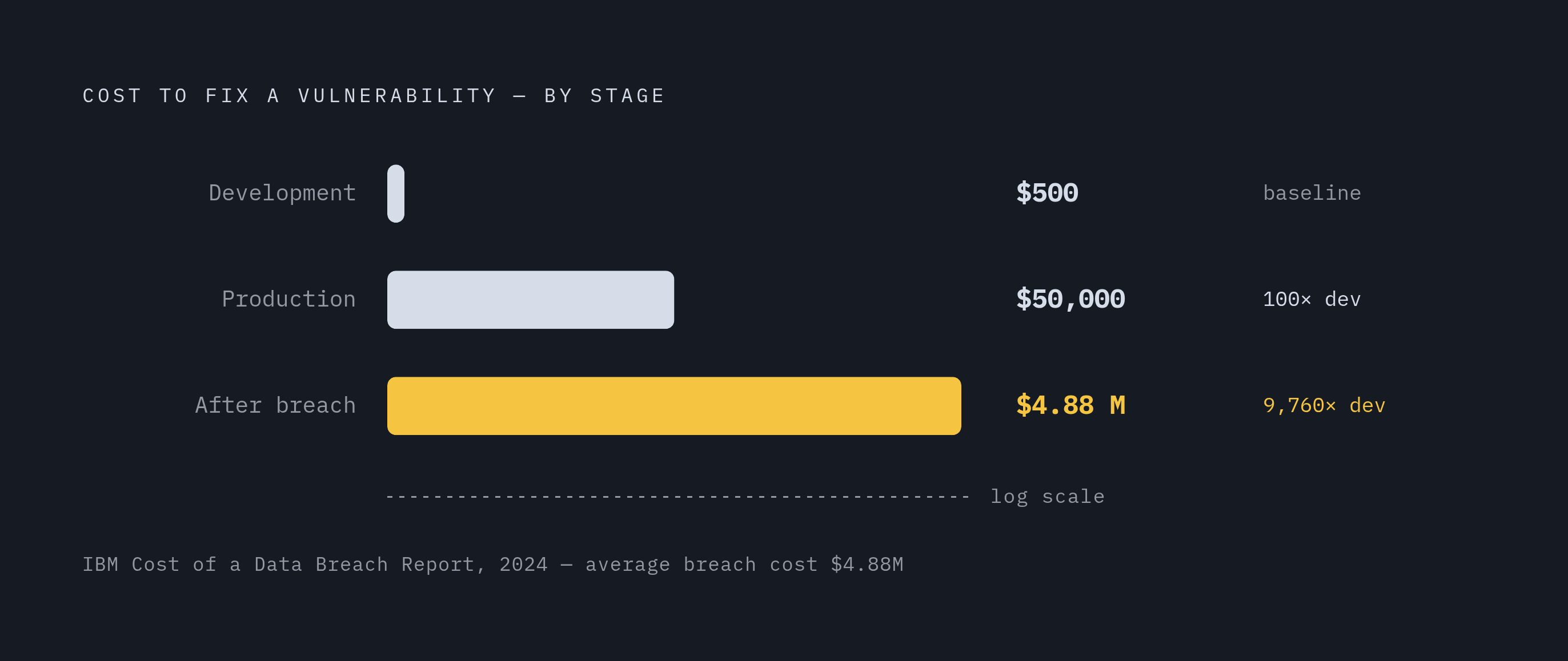
Testing vulnerabilities during development costs $500 to fix, not $50,000 in production.
Most engineering teams still treat penetration testing as a thing that happens after the code is done: one audit before launch, maybe an annual test if compliance forces the issue. That timing is the problem, because it puts vulnerability discovery at the exact moment fixing anything costs the most.
The math is not close. A vulnerability caught while a developer is still writing the code costs around $500 to fix, but let it slip into production and the fix can run past $50,000. Let it turn into a breach, and IBM's 2024 Cost of a Data Breach report puts the global average at $4.88 million. Application-layer vulnerabilities account for over 40% of breaches, and most organizations still test at the very end, after the architecture is locked and the code has shipped.
I've watched this get worse every year I've been doing this work. 48,185 CVEs were published in 2025, up 21% over 2024, and the window between "code written" and "known exploit exists" keeps shrinking. Waiting until release to test doesn't reduce risk, it just relocates that risk to the most expensive real estate on the timeline.
What "shifting left" actually means for penetration testing specifically
People throw "shift left" around as a catch-all: move SAST, SCA, secrets scanning, IaC scanning, container scanning earlier into the pipeline. Fine, do all of that, but none of it is penetration testing, and conflating the two is where teams get into trouble.
Automated scanning matches known patterns. A pen test is a person reasoning through the actual application in front of them, chaining small issues that look harmless in isolation into a real path to a breach, then proving it works with a live exploit. That distinction gets flattened constantly.
Shifting left on pen testing specifically means three things: adversarial thinking at the design phase before a line of code exists, targeted tests against features and components as they're built rather than waiting for the whole product, and findings that reach the team early enough to change an architecture decision instead of just padding the patch queue.
It does not mean swapping a human tester for a scanner and calling the output a pen test report. I've read enough of these relabeled reports at this point to recognize the tell immediately, and it leaves teams with coverage they don't actually have. This shift is as much about how a team organizes itself as which tools it buys. Security has to run through development as an ongoing discipline, not show up once a year as a vendor engagement on the calendar.
Threat modeling at the design phase as the first penetration testing input
Threat modeling is adversarial thinking before there's anything to scan. Someone sits with the proposed architecture and asks how it breaks. What comes out the other end is a prioritized list of attack scenarios, which is exactly what a pen tester needs to scope a test that matters instead of one that just checks boxes.
At the design phase this means mapping trust boundaries and data flows across the architecture, and identifying the high-value targets: authentication flows, payment paths, admin interfaces, anywhere ePHI lives. Write down the assumptions the team is making about what external parties can and can't do; those assumptions become test cases later. Assign risk ratings to each attack path so test depth matches actual exposure, not a guess.
That document becomes the blueprint for the tester downstream. It shows where the designers thought the risk was, and the test either confirms that or exposes where they were wrong. Skip this step and the reports that come back tend to be generic, missing the application-specific logic flaws that cause the breaches you actually read about.
Automated security scanning in the CI/CD pipeline — what it catches and where it stops
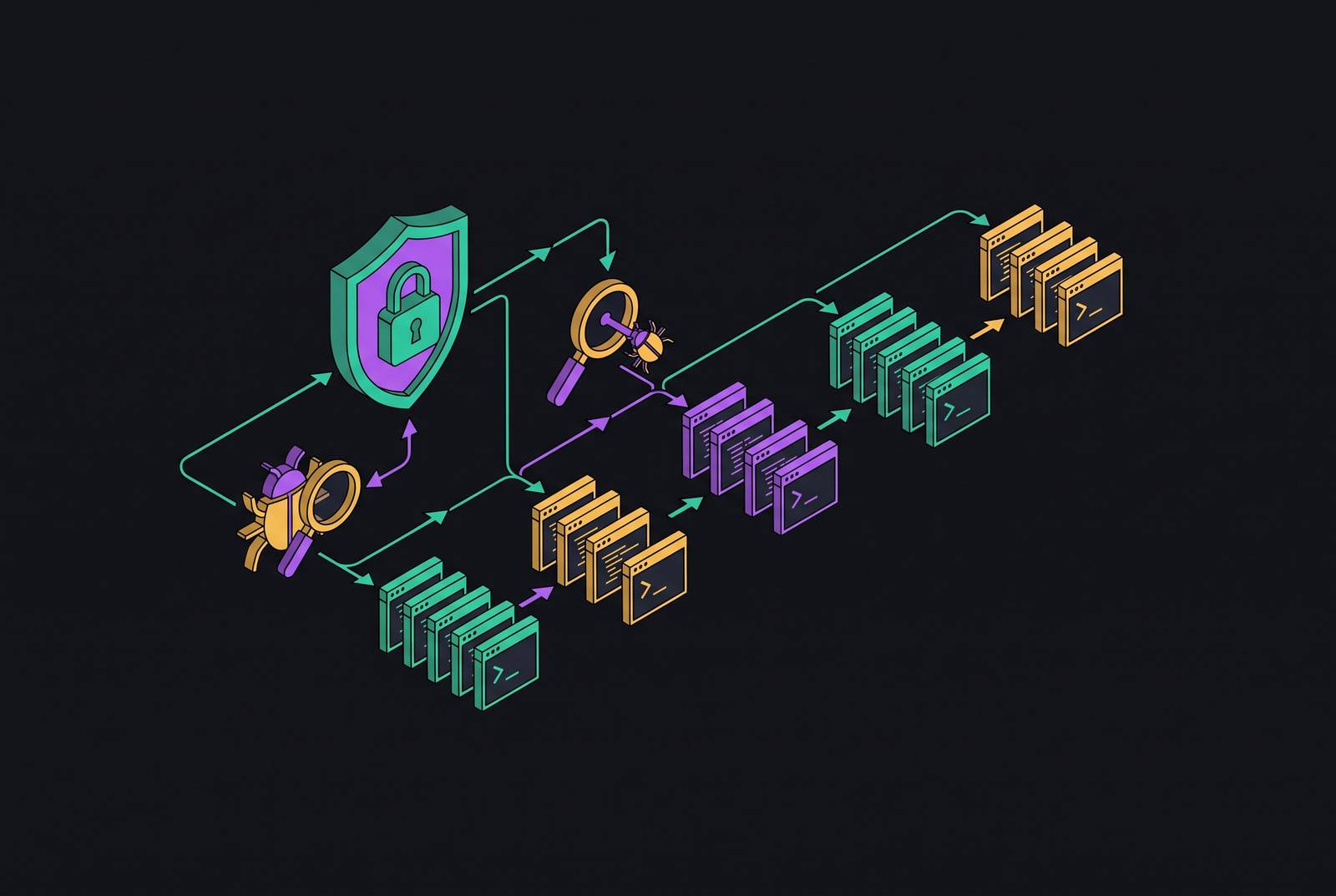
A full CI/CD security layer runs several scan types side by side. SAST catches insecure code patterns, SQL injection, XSS sinks, insecure deserialization, right at commit. SCA flags vulnerable third-party dependencies before they reach staging. Secrets scanning catches hardcoded credentials and API keys before they get pushed to a remote repo. IaC scanning surfaces misconfigured cloud resources, an open S3 bucket, an overpermissioned IAM role, before infrastructure gets provisioned. Container scanning checks base images against known CVEs.
Each of these fires on a pull request or a commit, so findings land in front of the developer who wrote the code while it's still fresh. Mature DevSecOps programs running this full layer report cutting production vulnerabilities by 60% and remediation cost by 90%.
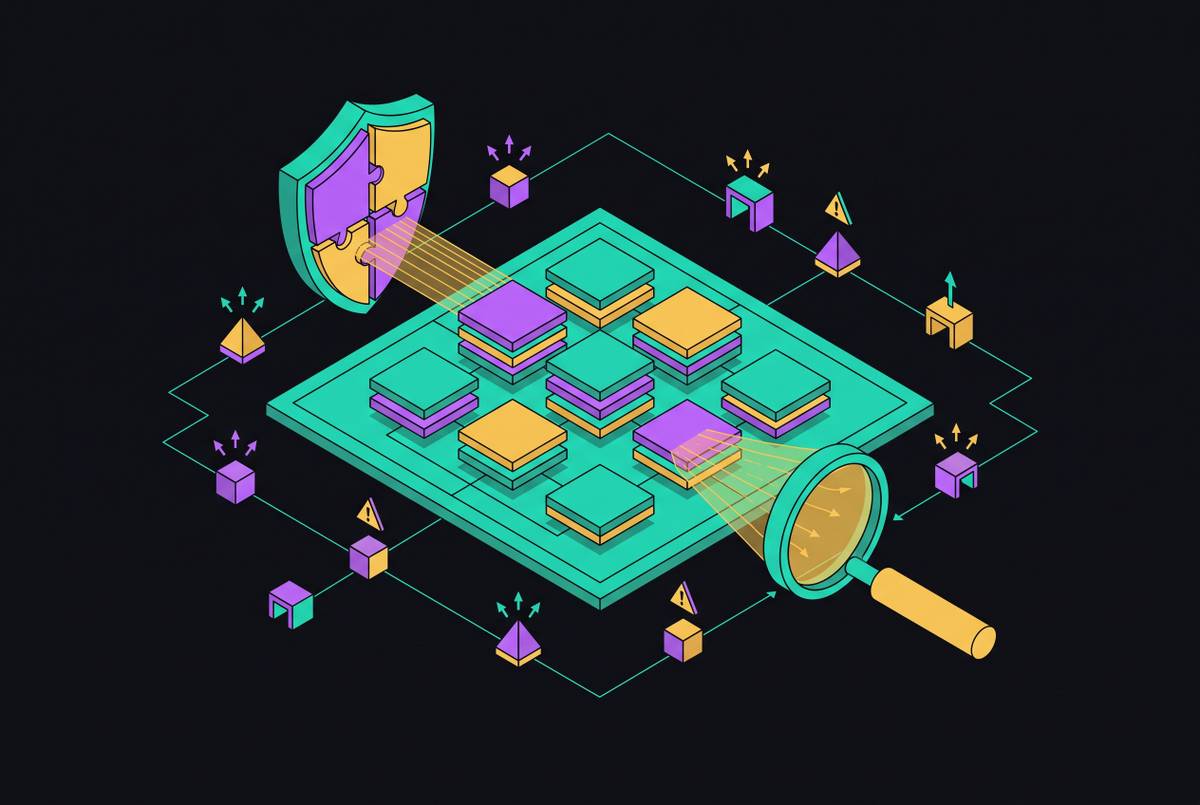
But scanners have a ceiling, and it's the same ceiling every time. They match patterns, but they don't reason about business logic specific to your application, and they can't connect a low-severity finding in one component to a critical path in another. They throw false positives that, left untriaged by someone who actually knows security, quietly wear down developer trust in the whole system. And SSRF, broken access control, authentication logic flaws: these slip past static analysis regularly.
That's the gap automation structurally can't close, and targeted human pen testing lives there.
Running targeted pen tests against features and components during development, not after release
The old model scopes the whole application, tests it once, delivers a report at release, by which point fixing anything means rework instead of a clean correction. The shifted model tests high-risk components as soon as they're stable, before they get wired into everything else.
Ship a new authentication flow? Test it before it connects to payments. Add a new API for a third-party integration? Test the authorization model before the first partner onboards. Rebuild the data access layer? That's new attack surface, treated on its own terms, not folded into a system that was tested six months ago.
Whitebox access is what makes this workable on a real schedule. A tester holding the source code, the cloud config, and the architecture docs can scope a component-level test fast, no black-box reconnaissance needed. Every finding at this stage is something the team can act on before deployment, while the developer who wrote it still remembers why, and before the component becomes load-bearing infrastructure a dozen other things depend on.
Penetration-testing-as-a-service platforms are what make this cadence realistic day to day: scope a test, kick it off, review findings, all through a platform instead of negotiating a fresh engagement every time. And a finding at this stage should come with a working exploit attached, not a theoretical severity score. The team needs to know exactly what an attacker could pull off, not what an attacker might theoretically attempt.
What periodic expert-led pen tests do that continuous automation and component tests cannot
Even a team running mature CI/CD scanning and frequent component tests still needs a periodic, full-scope test. I've sat in enough incident retrospectives to see the same three reasons come up.
Integration vulnerabilities only show up when components interact: an authorization bypass that only works once the authentication service, the session manager, and the data API are all running together at once. Configuration drift piles up too, since small changes and dependency bumps accumulate across a release cycle, and a periodic test looks at the system as it exists right now, not as it was designed six months back. And a good tester brings a kind of creativity that chains findings across components in ways no scanner, and no single component test, was built to surface.
Kaseya's 2024 Cybersecurity Survey found the most common cadence for full pen tests is twice a year, at 29% of organizations, with three to four times a year at 23% and once a year at 20%. Honestly, frequency should track risk and rate of change more than it tracks the calendar. After a major release, an architecture change, or a new integration, a full-scope test is warranted no matter when the last one happened.
Human review also makes a report credible outside the engineering team. A certified tester signing off on findings reads differently to an auditor, or a sophisticated customer doing due diligence, than an automated export ever will, and that difference shows. The deliverable from a periodic test should include an executive summary, CVSS-rated findings backed by proof-of-concept evidence, remediation guidance, and a letter of attestation the team can actually hand to a compliance reviewer.
How retesting and pull-request scanning close the loop between finding and fix
A finding that never gets retested is still an open liability, whatever the remediation ticket says. The team believes it's fixed, but that's not the same as knowing it's fixed, and the only way to know is retesting against the exact exploit that proved it in the first place.
A vendor with no retesting policy is telling you, whether they realize it or not, that the engagement ends when the report lands, not when the fix gets confirmed. Retesting belongs in the engagement from day one, either included or priced up front, not renegotiated after the fact.
Pull-request scanning does the same job on an ongoing basis. Once a vulnerability class turns up, say improper input validation in a specific service, automated scanning can watch for that exact pattern in future pull requests. A single pen test finding turns into a standing rule instead of a one-time fix, and developers get the feedback the moment they introduce the pattern, exactly when it's cheapest to reverse.
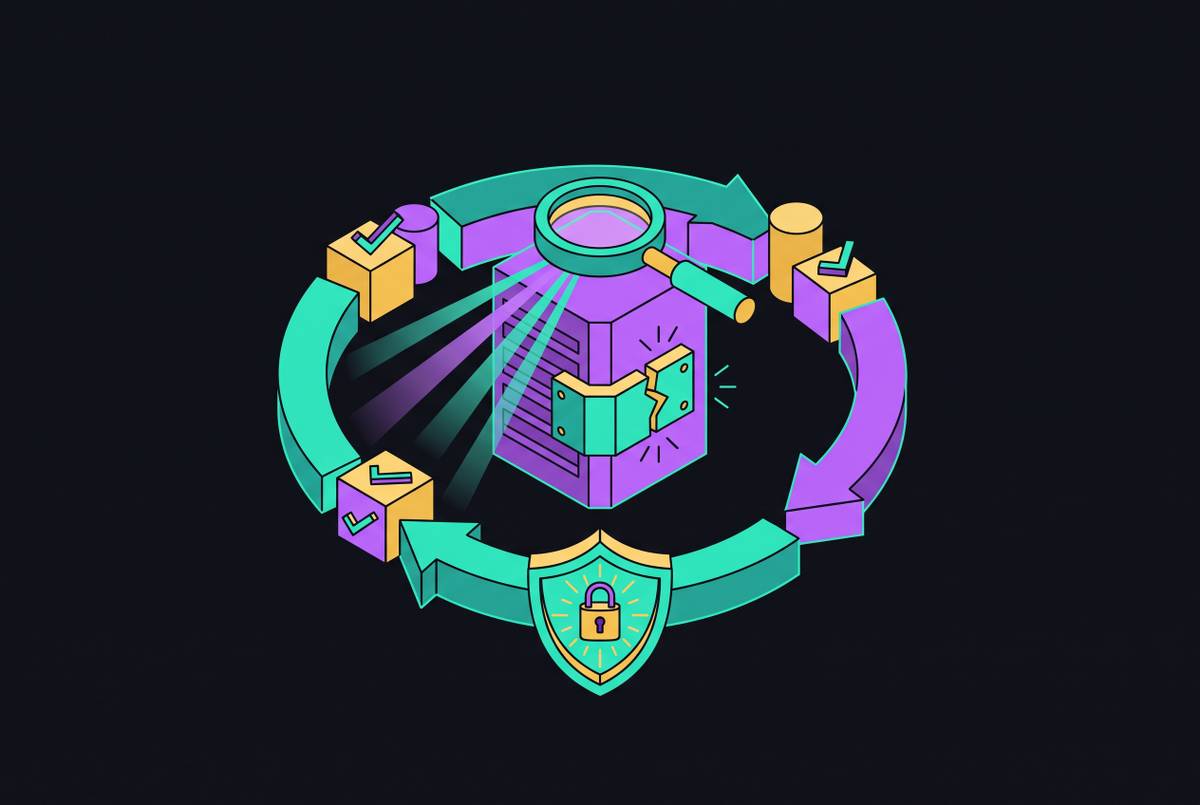
Put together, the loop runs like this: periodic expert tests catch what automation missed, findings move into the remediation workflow, automated scanning guards against the same issue coming back, and the next periodic test checks the whole system again. That loop is what separates a continuous security program from a string of one-off audits that just happen to land on a schedule.
How shift-left pen testing satisfies compliance requirements rather than conflicting with them
There's a common assumption that compliance pen tests and real security pen tests are separate exercises, each with its own budget line and calendar slot. Look closely at how the requirements are actually worded, though, and they don't have to be, because treating them as separate usually just wastes money.
SOC 2's CC4.1 asks auditors to see risk evaluated under real conditions. A continuous testing program with documented findings and remediation gives them far stronger evidence than a single annual report ever could. HIPAA's 45 CFR 164.308(a)(8) already requires periodic technical and non-technical security evaluations, and a proposed rule published January 6, 2025, expected to finalize in 2026, would make annual penetration testing explicit instead of implied. Organizations that haven't built testing into their SDLC yet are going to feel that gap the moment it lands.
ISO 27001:2022, the only version valid since the October 31, 2025 transition deadline, requires a planned, documented vulnerability management process under Clause 8.8. A risk-driven schedule combining component-level tests with periodic full-scope tests maps onto that requirement directly, no extra paperwork bolted on.
For teams handling ePHI, the stakes run sharper than the averages suggest. IBM's 2024 data puts the global average breach cost at $4.88 million, and healthcare breaches are widely documented to run significantly higher. Insurance carriers have caught up too, and now expect evidence of qualified human testing, not just scan output, before they'll write policies above certain coverage thresholds. A well-run shift-left program produces the audit report, the attestation letter, and the remediation log as a byproduct of doing the actual security work, not as compliance theater running in parallel.
Building the shift-left pen testing program in practice — where to start and how to sequence it
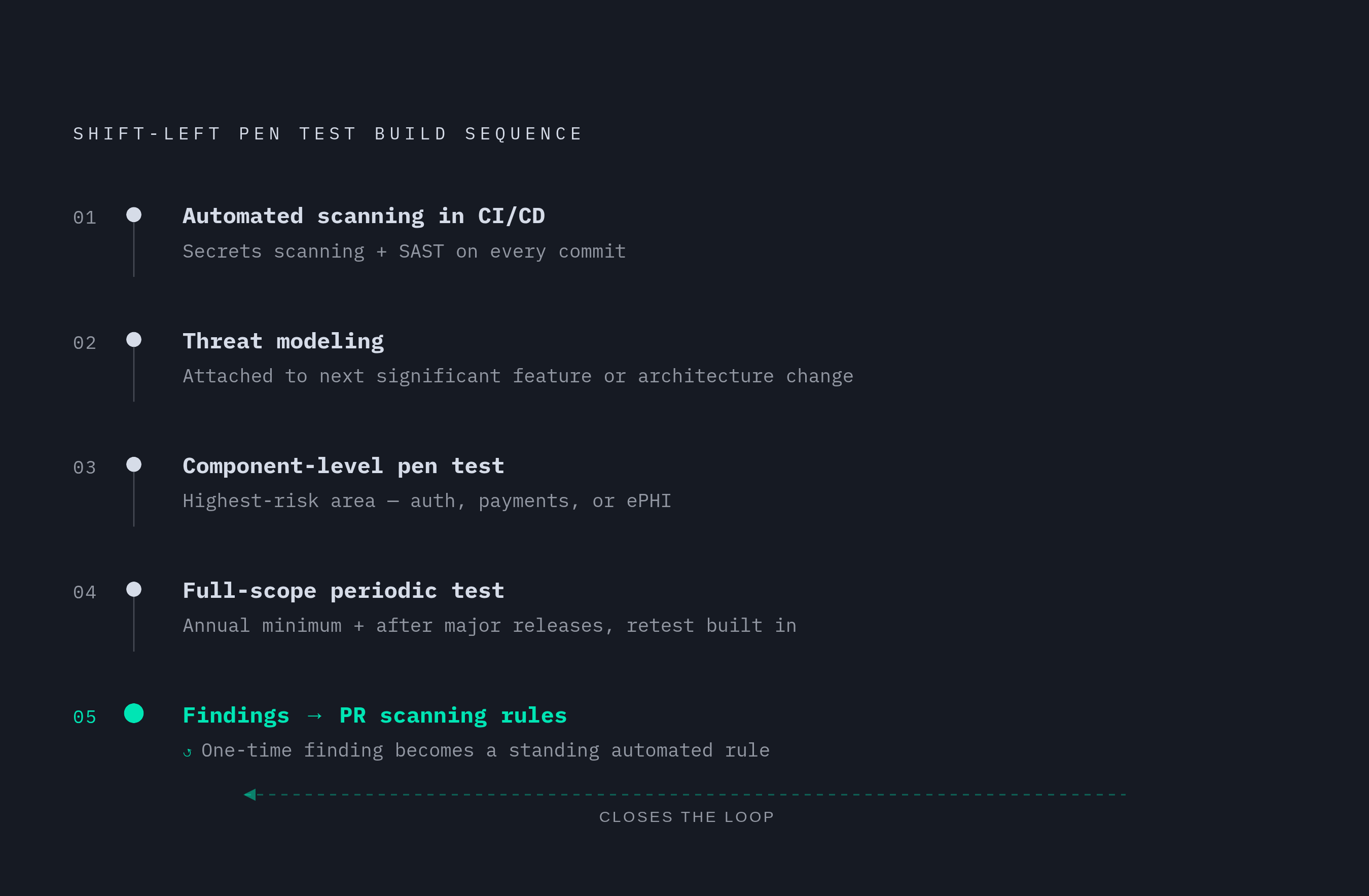
Trying to stand up every layer at once is how these programs stall out before they start. Sequence matters more than ambition here.
Start with automated scanning in CI/CD. Secrets scanning and SAST are the lowest-friction place to begin, and they catch the highest volume of the lowest-complexity issues before any manual work needs to happen. Next, attach threat modeling to the next significant feature or architecture change on the roadmap, rather than retrofitting it onto systems that already exist, and build the habit on new work first.
From there, run a component-level pen test on whatever carries the highest risk in the current codebase, whether that's authentication, payment processing, or wherever financial data or ePHI lives, and use whitebox access to scope it tight. Put a full-scope periodic test on the calendar with retesting built in, at minimum once a year, plus after any major release or new integration. Then turn pen test findings into pull-request scanning rules, so each vulnerability class becomes an automated check watching for its own return.
When picking a partner for this model, a few things matter more than whatever's in the pitch deck. Whitebox access, meaning source code, cloud configs, and documentation on hand, so component tests get scoped in days instead of weeks. Testers holding real, practical certifications like OSCP or OSWE who put their name on findings, not an automated export with a logo slapped on it. Every finding proven with a working exploit, because a theoretical severity score doesn't tell an engineering team what to fix first. Retesting included or clearly scoped up front, on-demand scheduling with a direct line to the tester, and a compliance-ready report with an attestation letter as standard, not an upsell.
Counting how many tests ran this year doesn't tell you if the program works. What tells you is how much time passes between a vulnerability getting introduced and someone actually confirming it's fixed, and whether the team can say, honestly, that whatever reached production was tested by someone who tried to break it.