Why Every Pen Test Finding Must Include a Working Exploit
Unverified findings waste remediation resources and leave real attack paths open.

False confidence is more dangerous than acknowledged ignorance. A company that knows it hasn't tested stays alert. A company that believes it has tested goes quiet, stops asking hard questions, and redirects budget elsewhere. That's not a theoretical risk. That's the actual sequence of events that precedes most preventable breaches.
IBM's Cost of a Data Breach Report 2024 put the average breach at $4.88 million, up 10% year over year. Some of that figure reflects breaches that happened despite good testing. A lot of it reflects decisions made on bad information: remediation cycles burned on phantom issues, and real attack paths left open because they never triggered a scanner and nobody was paid to look harder. Verizon's 2025 Data Breach Investigations Report found a 34% year-on-year increase in vulnerability exploitation as an initial access method. Attackers already know what's genuinely reachable. The organization receiving a scan-and-report deliverable frequently does not.
The concrete harm is predictable once you've watched it play out a few times. Engineering teams spend weeks patching findings that aren't actually exploitable in their specific environment. Chained vulnerabilities, authorization gaps, business logic flaws that require someone to understand how the application is supposed to work: those stay open. They didn't surface on the scanner, and nobody's scope included chasing them manually. Meanwhile, an auditor receives a document that looks credible, leadership accepts it, and the organization stops worrying.
The gap between a strong engagement and a weak one is not subtle. One finds the payment logic flaw an attacker would use for financial fraud. The other flags a deprecated TLS version. Both satisfy the checkbox. Only one prevents a breach. Unverified findings collapse that distinction, treating everything as equally uncertain, which means nothing gets the urgency it deserves.
What a Working Exploit Actually Looks Like in a Pen Test Report
A credible finding contains four things: the vulnerability class, the specific location in the application or infrastructure, the exact exploit path used, and a proof-of-concept demonstrating real impact. Remove any one and you have an assertion, not evidence.
"Real impact" is specific. An SQL injection finding is not "this parameter appears injectable." It's a UNION-based query returning actual rows from a target table, or a time-based blind injection exfiltrating data when direct output is suppressed. An XSS finding is not "reflected input detected." It's a crafted payload executing in a target browser, with a reproducible scenario showing session hijacking or credential exfiltration. SSRF, insecure deserialization, hardcoded secrets: the tester follows the chain to its natural conclusion, mapping what can actually be reached, read, or controlled. Stopping short of that isn't conservatism. It's theater.
The artifacts belong in the report: raw request and response logs, timestamps, screenshots of successful exploitation. Without them, a finding can be challenged or dismissed by auditors, engineers, or the leadership team deciding how much remediation to authorize. If the artifact doesn't exist, the finding didn't happen in any meaningful sense that matters to anyone who needs to act on it.
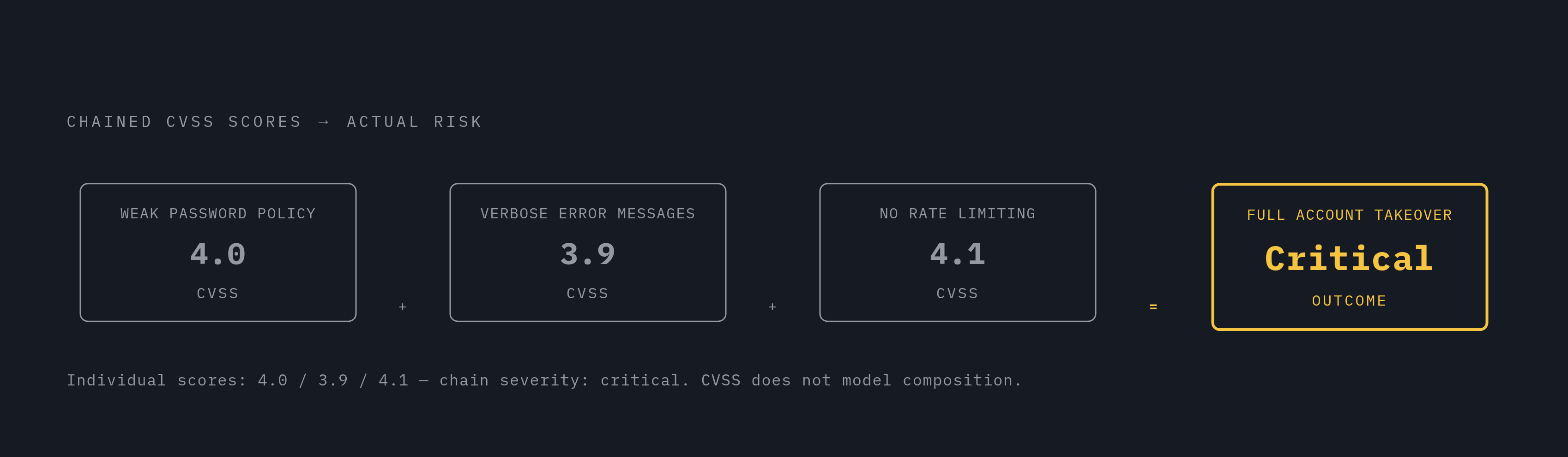
Attack chain documentation matters most for complex findings, and those are usually the ones that carry the most actual risk. Business logic flaws and authorization bypasses frequently require chaining multiple individually low-severity issues. The proof-of-concept must show the chain, not just the individual links. I've seen three findings, each scored around a 4.0, chain into full account takeover. The individual scores were not just unhelpful; they were actively misleading. A working exploit tells a remediation engineer what an attacker can actually do. That's the only framing that produces a correctly prioritized fix and a meaningful verification that the fix worked.
Why Human Expertise Is Required to Produce a Working Exploit, and What Happens When It Isn't There
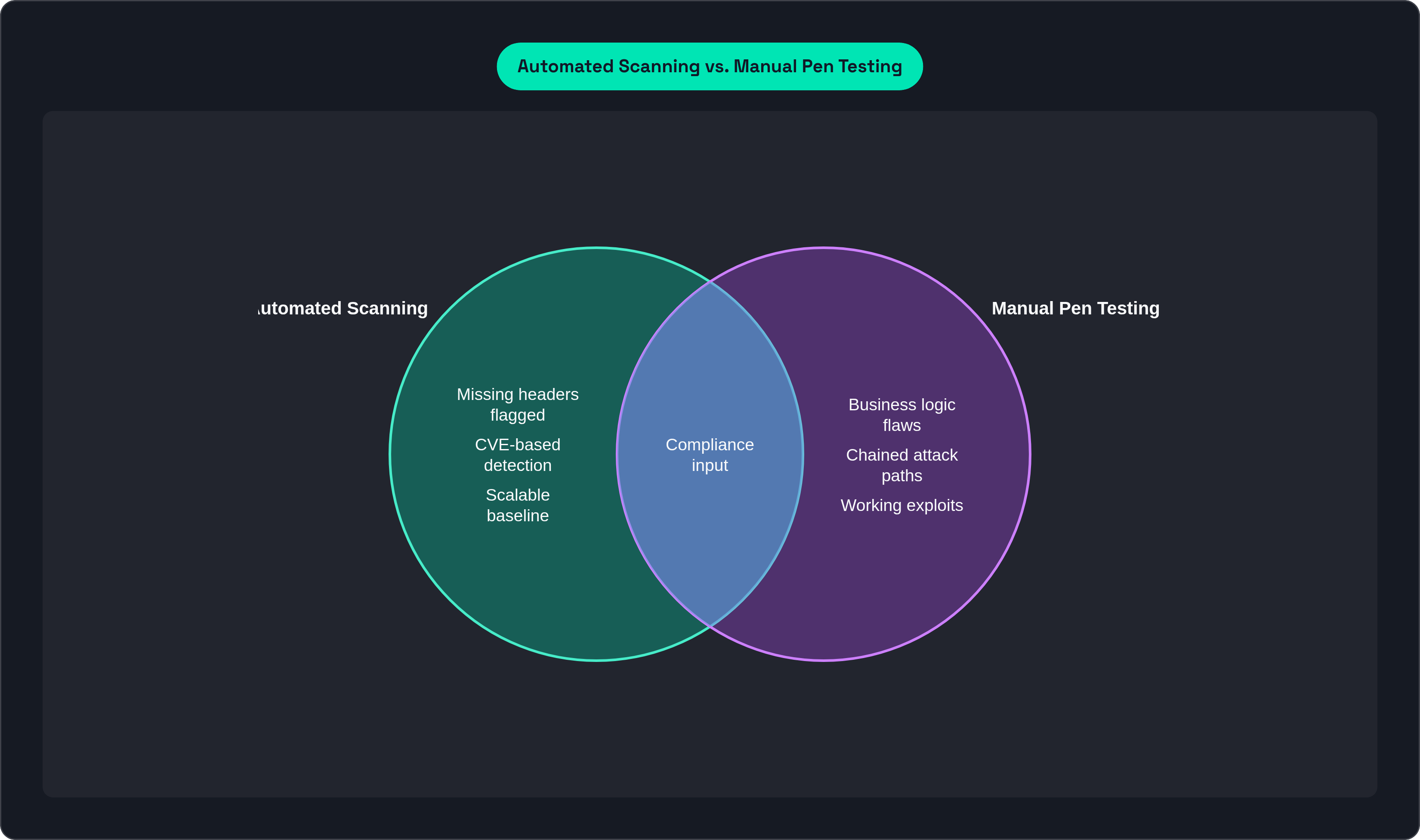
Quality engagements allocate 60 to 80 percent of time to manual testing. Automated scanning is one component of that work, a useful one, but it's the baseline, not the deliverable. Anyone selling automation at penetration test prices is making a margin you're subsidizing.
Scanners cannot understand that step three of a checkout flow should require step two to have completed first. They cannot identify authorization bypasses that depend on application-specific context. They cannot reconstruct chained attack paths where no single issue is critical but the combination is severe. They cannot detect API misconfigurations that only surface under specific sequences of authenticated calls made by someone who already knows what to look for. These are not edge cases in well-built applications. They are consistently where the material risk actually lives, because they're exactly the class of issues that developers don't think to protect against and scanners don't know to find.
The AI-generated code problem compounds this. A December 2021 Cloud Security Alliance study of 15 production applications built with five major AI coding tools found that every single one lacked CSRF protection, had no security headers configured, and introduced SSRF vulnerabilities. A scanner can flag a missing header. Only a tester can demonstrate what an attacker does with that absence, which is where the value of manual expertise actually lives.
Credentials are a meaningful proxy for exploitation ability, and they are not interchangeable. OSCP, OSWE, and GXPN holders have demonstrated practical exploitation under real, timed conditions. The OSCP specifically requires candidates to compromise machines within a time limit and produce working exploits as the deliverable. The CEH validates security knowledge through multiple choice and does not test the ability to exploit anything. A vendor whose team credentials stop at CEH-level warrants direct questions about testing depth before you sign. The staffing question buyers almost never ask: who will actually run the commands? Not who manages the account or presents the findings. Who runs the commands. If a vendor cannot name that person and point to verifiable credentials, there's a reasonable probability you get assigned to a junior analyst, and what arrives in the deliverable is scanner output with reformatted headers.
How to Read a Pen Test Report and Spot When Exploitation Evidence Is Missing
Once you've read enough weak deliverables, the signals stop being subtle. Findings without exploitation evidence. Remediation language like "apply vendor patches" with no specifics about the exploit path that made the patch necessary. CVSS scores as the only risk context, with no business impact narrative and no attack chain. Report structure that mirrors known scanner templates, with branding applied and methodology unchanged. No raw logs, no timestamps, no screenshots. Nothing a skeptical auditor could independently verify.
The methodology question that separates credible vendors from the rest is simple and direct: "Walk me through how you ensure findings are validated through actual exploitation, not just scanner detection." A vendor who can't answer that specifically, with reference to their testing process and how manual work is actually scoped, is selling vulnerability assessments. The gap between what they're delivering and what they're charging is margin you're handing over.
Ask to see a sample report from a comparable engagement before signing anything. A vendor that won't provide one probably has no deliverable they're confident defending. What you're looking for is working exploits, logs, screenshots, attack chain documentation, and findings signed off by someone with verifiable credentials. If those elements aren't present, the sample is already telling you what the real engagement will look like.
Retesting is where a lot of buyers leave money and protection on the table. A vendor with no retesting policy after remediation is not invested in whether the vulnerabilities are actually closed. "We applied the patch" and "the exploit no longer works" are different statements. One is an action; one is evidence. Only one constitutes a closed finding.
On price: a standard SaaS-scope penetration test runs roughly tens of thousands of dollars. A quote substantially below that floor deserves scrutiny, not celebration. The economics of a low price almost always point to automation-heavy delivery with minimal manual verification, which is exactly the dynamic that produces unverified findings and false assurance.
What Compliance Frameworks Actually Require, and Where the Exploit Standard Fits In
The direction across major frameworks is toward exploitation evidence, not just findings. Understanding where each framework stands matters for compliance planning, and more immediately, for making the case internally that rigor isn't optional.
SOC 2 doesn't formally mandate penetration testing, but Common Criteria 4.1 explicitly names it as a recognized ongoing evaluation method. Auditors increasingly expect proof that security controls function under adversarial conditions. A scan-only report satisfies the checkbox; a report with exploitation evidence satisfies the auditor. Audit failures frequently trace back to scan-only testing, missing retests, or outdated reports, all symptoms of findings that were never proven.
HIPAA currently requires ongoing risk analysis and risk management without prescribing specific testing intervals, though a proposed 2025 rule update is expected to make annual penetration testing explicitly mandatory for covered entities and business associates. Organizations waiting for that requirement to materialize before building a rigorous testing program are accepting exposure on borrowed time.
ISO 27001 is explicit. Penetration testing appears in Annex A Control 8.8, governing management of technical vulnerabilities. Under Clause 9.2, pen test findings must feed into the internal audit cycle: vulnerabilities identified must be added to the risk register, treatment decisions must be documented, corrective actions must be verified for effectiveness. A finding without a working exploit provides nothing meaningful to document in a risk register. Unverified hypotheses are not risk treatment inputs.
PCI DSS requires annual internal and external penetration tests under Requirement 11, plus testing after any significant infrastructure change. The requirement doesn't distinguish between a scan and a real test in its language, but an auditor reviewing findings that lack exploitation evidence is entitled to ask whether the requirement was genuinely met. In practice, many do.
When SOC 2, ISO 27001, and PCI DSS auditors all probe for exploitation evidence, the minimum bar is no longer a report that lists vulnerabilities. It's a report that proves them. For organizations pursuing multiple frameworks simultaneously, the most efficient path is scoping a single test to cover the superset of in-scope systems and mapping each finding to every framework it satisfies. One rigorous engagement, multiple audits addressed.
What the Exploit-First Standard Demands from the Testing Engagement Itself
Whitebox access is the precondition for depth. Finding and exploiting business logic flaws, chained vulnerabilities, and application-specific misconfigurations requires access to source code, cloud configurations, and documentation, not just an external IP range. Without code-level access, a tester reconstructs the attack surface from the outside, guessing at what exists. With it, they can map every path and concentrate effort where real risk lives. That difference in coverage is not marginal. It's the difference between a surface audit and a genuine threat exercise.
The retest loop closes the exploit cycle. A working exploit is a test case, not just a deliverable. After remediation, the same exploit runs again to confirm the path is actually closed, not just that a patch was applied somewhere. If the retest isn't scoped into the engagement from the start, the vendor is handing you a report and walking away before the work is finished.
Continuous scanning on pull requests extends the standard into the development cycle, catching new attack surface as it's introduced rather than discovering it months later during an annual test. Given what the Cloud Security Alliance findings suggest about AI-generated code, the surface is expanding faster than annual testing can meaningfully track. Annual snapshots of a changing codebase are not a security program. They're a recurring audit ritual that gives the appearance of diligence without the substance.
A 2023 Cybersecurity Insiders survey found that 72% of organizations believed penetration testing had prevented a breach. That belief is only warranted when the test produced findings that were actually proven. Every finding in a credible report includes a proof-of-concept, reviewed and signed off by a certified expert at the OSCP level or equivalent before it reaches the customer. A finding without that review is an opinion. A list of unproven claims doesn't prevent breaches. A working exploit, followed by a verified fix, does.