Security Requirements in the Software Development Lifecycle
Integrating security from planning through production prevents costly vulnerabilities.
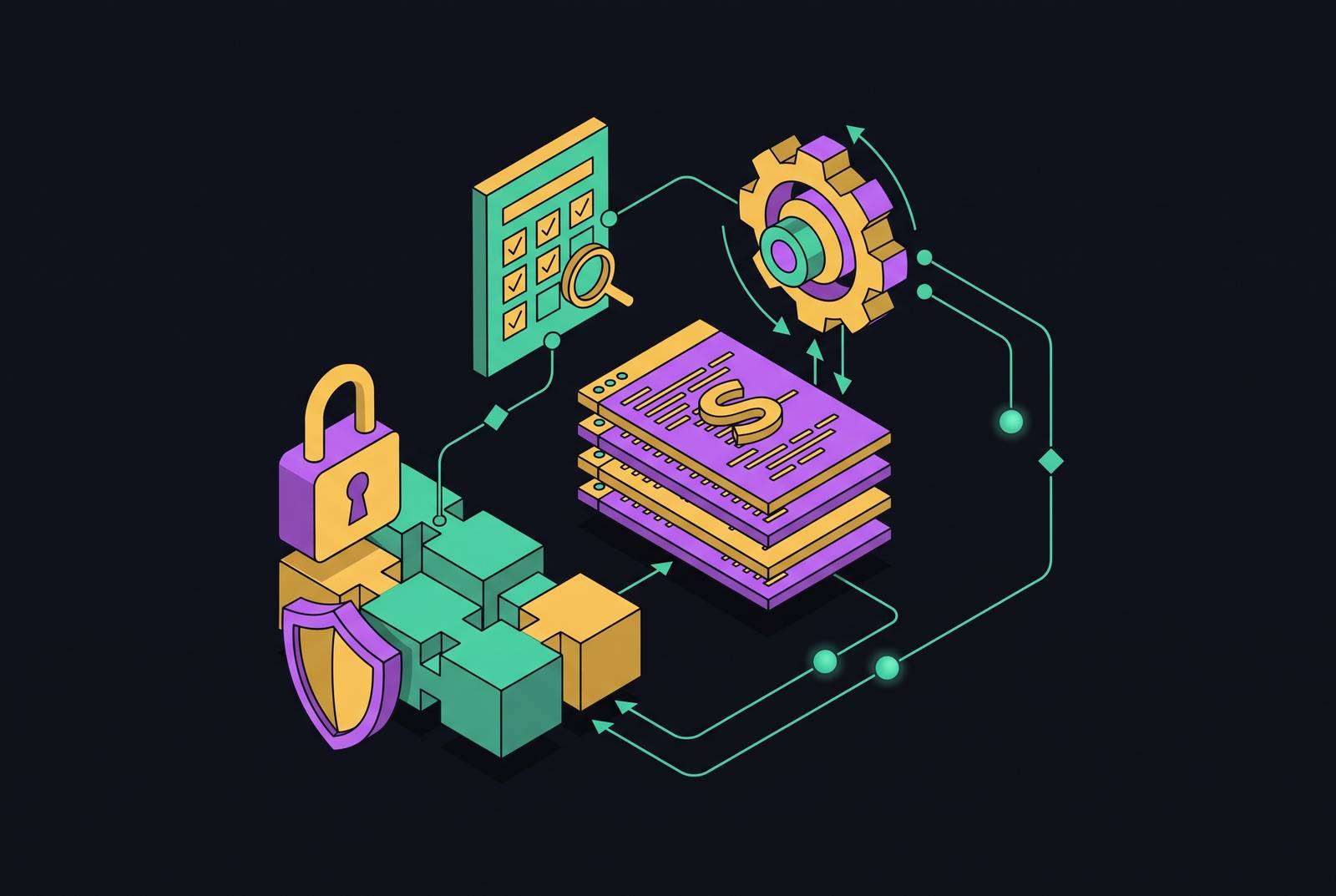
Security requirements are inputs that get defined, built into architecture, checked in the workflow, and tested at every stage of building software, from the first planning conversation to the moment code hits production. Most teams still treat security as a review that happens after a feature ships. That sequencing carries a real cost, and it's a meaningful part of why breaches cost what they cost.
Here's why the order matters. A vulnerability caught in production doesn't just need a patch. It needs rework across code, tests, documentation, and the deployment pipeline, and by the time anyone finds it, the flaw is often already sitting in a customer-facing release. Verizon's 2025 Data Breach Investigations Report found vulnerability exploitation rose 34% year-over-year, now accounting for one in five breaches, and most of those vulnerabilities got introduced during development, not during operations. Tools matter, but timing determines whether those tools catch anything useful.
A security requirement is a specific, testable condition code has to satisfy: authentication tokens expire after N minutes, all SQL queries use parameterized inputs, that kind of thing. A requirement is what you specify. A control is how you enforce it, whether that's a linter rule, a code review checklist, or a scanner in the CI pipeline. Both belong in the software development lifecycle, and both have natural points where they should attach. The rest of this piece maps those points out, one phase at a time.
What security requirements actually look like before a line of code is written
Most teams lose the most ground right here, in planning, before anyone's touched an IDE. Threat modeling is the cheapest security work anyone will ever do on a project, and it's also the step most consistently skipped. Skipping the cheap step is exactly what makes the expensive step, the production incident, more likely.
In plain terms, threat modeling means mapping out what the system does, what data passes through it, and who's interacting with it. Then you ask where an attacker would actually aim: login flows, API boundaries, the line between what a regular user can do and what an admin can do, any external integration that pulls in outside data. STRIDE is a useful framework for this even without a dedicated security team in the room. It stands for Spoofing, Tampering, Repudiation, Information Disclosure, Denial of Service, and Elevation of Privilege, six categories that cover most of the ways a system gets abused.
The output of a threat model belongs in the engineering workflow, not in a slide deck nobody reopens. Every threat identified should turn into at least one testable requirement, something like: the password reset endpoint must rate-limit to N requests per minute per IP address. That requirement needs to live inside the user story or ticket where the engineering work happens.
This is also where compliance obligations get satisfied cheaply instead of expensively. SOC 2 expects evidence of risk evaluation, and threat modeling documentation covers that when it's referenced during an audit. ISO 27001:2022 expects vulnerability management to start at design, not at the remediation stage after something breaks. HIPAA's risk analysis requirement calls for assessing threats to protected health information, and for any system touching patient data, that assessment has to begin at the architecture stage, full stop.
Skip this step and defaults take over. An authentication system built without an explicit session timeout requirement ships with whatever the framework provides out of the box, and that default is often indefinite. Nobody chose that; it just happened.
How to encode security requirements into architecture and design decisions
Design is where requirements turn into structure, and it's where a wrong call creates a whole class of vulnerabilities that no amount of code review will fully undo later. Get the architecture wrong here and you're patching symptoms for years.
A few decisions made at this stage carry outsized weight. Centralized authentication versus per-service authentication is one: decentralize it and enforcement gets inconsistent across services, since each team ends up interpreting the rules slightly differently. Data classification matters too. Knowing which fields count as sensitive, before a database schema exists, sets encryption needs, logging restrictions, and access controls up front instead of as an afterthought. Trust boundaries between services need to get drawn explicitly, on the actual architecture diagram, because that forces a team to say plainly what one service is allowed to ask another for. That's the precondition for stopping server-side request forgery and privilege escalation before they're even possible. Dependency choices made here, which libraries a team pulls in and from where, set the shape of the software supply chain attack surface for the life of the project.
A lightweight design review works as a gate at this point, built around one question rather than a full audit: does this design actually satisfy the requirements the threat model produced? A senior engineer with security background can run it, or a designated security champion on the team, or an outside reviewer for anything high-risk. OWASP's Application Security Verification Standard gives a ready-made checklist for this, with tiered levels mapping to different risk tolerances, useful for confirming that authentication, session management, access control, and cryptographic handling are all covered before a single line of implementation code gets written.
Teams with full visibility into their own architecture can trace attack paths an outside tester would never find from the outside looking in. That's the whitebox advantage, and it applies just as much to an internal design review as it does to a later penetration test.
Security checks that belong inside the development workflow itself
Implementation is where requirements are most likely to get forgotten. Developers are moving fast, deadlines are real, and there's no natural prompt to stop and check security unless the workflow builds one in.
Static analysis, SAST, scans source code for known-bad patterns: unsanitized inputs, hardcoded credentials, unsafe deserialization, deprecated cryptographic functions. Running it only at the CI pipeline stage is too late, because by then a developer has already moved three tickets past the one where the flaw lives. Feedback needs to show up in the editor, before the commit happens. SAST only catches what it's trained to recognize, though; it won't spot a business logic flaw, so it replaces none of the human review steps that come after it.
Software composition analysis covers a different gap: dependency risk. It tracks third-party libraries against known CVE databases, and it should actually block a merge when a dependency update introduces a critical-severity CVE, not just log a warning somewhere nobody checks.
Secrets detection deserves its own line item. Hardcoded API keys, tokens, and database credentials sitting in source code remain one of the most consistently exploited issues across software codebases. Pre-commit hooks and CI-level scanning stop these from ever reaching a repository in the first place, a very different outcome from catching them after they've already been pushed.
Secure coding standards only work as requirements, not suggestions. A guideline is advisory; a requirement blocks the merge until it's satisfied. All database queries use parameterized statements, which stops SQL injection. All file uploads validate MIME type on the server side, which stops file-based attacks. All error messages suppress stack traces in production, which stops information leakage. None of these are complicated rules. The discipline is in enforcing them every single time, not most of the time.
Code review picks up what static analysis misses: authorization logic, business logic flaws, broken access control patterns that no scanner is built to recognize. A few questions embedded directly in the pull request template go a long way. Does this change introduce a new trust boundary? Does it handle untrusted input? Does it touch authentication or session management? Simple questions, asked every time, catch a surprising amount.
Why pull-request scanning changes the economics of finding vulnerabilities
The cost of finding a vulnerability scales with how far it's traveled from where it was introduced. A flaw caught during code review gets fixed in minutes, by the same person who wrote it, while the context is still fresh in their head. A flaw caught in a quarterly scan takes real re-investigation: someone has to reconstruct the context, figure out who owns the code, and schedule the fix into a sprint. A flaw caught in production, or worse, by an attacker, means incident response and possibly a breach. IBM's 2024 report put the global average cost of a breach at $4.88 million, with healthcare averaging $9.77 million. The distance between introduction and discovery is, in a very real sense, the price tag, and quarterly scanning is a bet that nothing important happens in the gap between scans. That bet loses more often than teams admit.
Scanning every pull request catches things periodic scans structurally miss. A security regression, where a new commit quietly reintroduces a pattern that was already patched once. Incremental attack surface expansion, where a new API endpoint or a broadened permission scope slips into a PR that never gets reviewed for what it actually exposes. Dependency changes, where a routine library version bump drags in a vulnerable transitive dependency nobody noticed.
The market is already moving this direction. The global DevSecOps market was valued at $8.93 billion in 2024 and is projected to reach $26.21 billion by 2032, growing at a 14.6% compound annual rate, and that growth is driven by organizations pushing security earlier into the pipeline instead of treating it as a separate downstream function.
Doing this without slowing teams to a crawl takes some discipline of its own. Scan results need to show up inside the pull request itself, not in some separate dashboard developers will never open on their own. Only high-confidence, high-severity findings should block a merge; false positives that block work erode trust in the tooling fast, and once developers stop trusting the scanner, they start finding ways around it. Findings should also get tracked over time, since a vulnerability class that keeps reappearing points to a training gap rather than a tooling gap.
What the testing phase must actually verify about security requirements
Testing is where security requirements get validated, or exposed as unmet, but only if the tests are actually built to check requirements rather than run a scanner and call it done.
Functional security testing and vulnerability scanning answer different questions. Functional testing asks: does this requirement actually hold? Does the rate limiter block the 101st request, or does it let it through? Does the access control genuinely stop user A from reading user B's records? A vulnerability scanner asks something narrower: are there known CVEs sitting in these components? Both questions matter. Neither one substitutes for the other, and a team that runs only one is missing half the picture.
Dynamic analysis, DAST, interacts with the running application the way an actual attacker would, which makes it useful for catching injection flaws, broken authentication, and misconfigured headers, things static analysis simply can't see because it never runs the code. It has to run against an environment that matches production configuration closely, because a skeleton staging environment with different settings produces results that don't map to reality.
Penetration testing verifies the requirements no automated tool can check. Business logic flaws, chained attack paths, authentication bypass patterns; these need a person reasoning through the application the way an attacker would, since automated tools don't chain findings together into a larger exploit path. Whitebox penetration testing, where the tester has access to source code, cloud configuration, and architecture documentation, covers the attack surface completely instead of only what's reachable from outside, and that's the version most teams should be running rather than a blindfolded outside-in test that misses everything internal. Every finding should come with a working exploit attached, not a flag marked "potential issue," because unverified maybes create false confidence in both directions: too much fear over nothing, or too much comfort over something real. Testers with demonstrated exploitation skill rather than purely theoretical knowledge matter when the resulting report goes in front of auditors or enterprise customers who read it closely.
Every finding from a test should reference the specific requirement it violates. That's what closes the loop between what got specified at design time and what actually got checked later. Any requirement with no corresponding test coverage is a gap that belongs in the test plan explicitly, not left to be discovered by accident.
How penetration test findings feed back into the development process
The failure mode most engagements fall into is familiar: a PDF report lands, a handful of critical findings get patched, and everything resets for next year, with the same vulnerability classes turning up again on schedule. That cycle is the clearest sign a security program isn't actually learning anything.
Findings deserve better treatment than "bug, patched, closed." A SQL injection finding is a signal that the requirement "all database queries must use parameterized statements" either never got specified, never got enforced during code review, or never got caught by static analysis. Every finding category should prompt the same question: where in the lifecycle did this slip through, and what control needs to exist so it doesn't happen again?
Remediation needs to run through the same system engineering already uses for its own work, not a separate security tool developers rarely log into. CVSS scores give a starting point for prioritization, but business context has to weigh in too; a medium-severity finding in a payment processing flow outranks a high-severity finding sitting in an internal admin tool with no external exposure. Retesting matters as much as the original test: fixes get checked by the same team that found the issue in the first place, not just assumed correct because a ticket got marked closed. A retest confirms the fix actually holds and didn't quietly introduce a new problem.
If a tester finds an attack path the original threat model never anticipated, that threat model is incomplete, and it needs an update before the next development cycle starts. This is the mechanism by which security requirements actually improve over time instead of sitting frozen in a document from eighteen months ago.
A closed loop like this also happens to make audits easier, almost as a side effect. SOC 2, ISO 27001, and HIPAA reviewers are all looking for the same basic evidence: findings that were tracked, remediated, and verified. A remediation workflow with documented retests satisfies that without extra work invented just for the audit. An audit-ready report with a signed letter of attestation from a certified tester gives auditors the paperwork they need, and the closed loop underneath it is what actually earns the confidence behind the signature.
Integrating continuous security validation beyond the annual pen test
Annual pen tests have a timing problem built into them, and it's not a minor one. Modern SaaS teams ship weekly, sometimes daily, and the attack surface six months after a test bears little resemblance to the one that got tested. Treating a once-a-year test as sufficient coverage is a bet against how much changes in a year, and it's a bet most teams keep losing.
Plenty changes in that window. New API endpoints and microservices go live. Third-party integrations get added mid-cycle, often without anyone flagging them for security review. Cloud configuration shifts quietly: new storage buckets, new permission policies, new network rules, none of which show up in last year's report. New CVEs get published against dependencies already sitting in production, unrelated to anything the team changed.
Regulatory expectations are already drifting toward continuous validation instead of a once-a-year snapshot, and the logic tracks: a security posture that only gets checked annually is only ever accurate for one day out of the year. Treating security requirements as living inputs, defined at planning, built into architecture, enforced in the workflow, and checked continuously through testing, is what keeps that posture honest for the other 364.