Temporary Mitigations for Critical Vulnerabilities Awaiting Full Remediation
Temporary mitigations buy time while teams work toward permanent fixes for critical flaws.

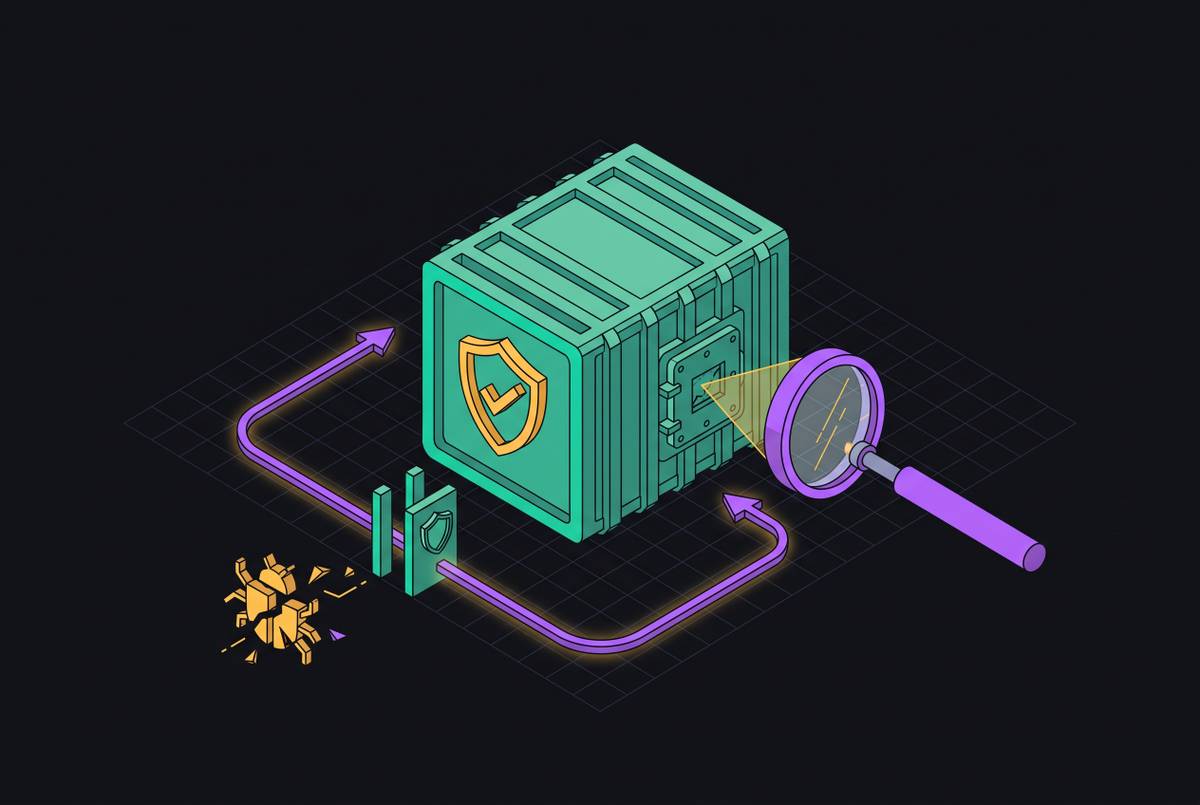
A confirmed critical vulnerability does not get fixed the moment it's found. During that stretch, the vulnerability sits exposed, and the only thing standing between a working exploit and a production system is whatever temporary control the team puts in place. Disclosure happens first, remediation happens later, and the space between the two, where attackers operate, is a structural fact of how software gets fixed. Every section that follows is about how to manage that space well, because the space itself is not going away.
Deciding which vulnerabilities need a temporary mitigation plan
Putting a compensating control in place costs something. It adds operational friction, it takes staff time to deploy and monitor, and it can break things that were working fine. That cost means not every vulnerability on a scan report deserves a temporary mitigation plan, and the first job is figuring out which ones do.
CVSS severity score, on its own, is a weak way to make that call. NinjaOne's 2026 remediation guide recommends pairing CVSS with EPSS, the Exploit Prediction Scoring System, because EPSS points attention at the small slice of vulnerabilities that actually get exploited in the real world rather than the much larger slice that merely sound severe on paper.
FedRAMP's RFC-0012 Continuous Vulnerability Management Standard uses a sharper term for this: a "credibly exploitable vulnerability," one where a realistic attacker with the right knowledge could actually pull it off. That's the bar that should trigger urgent action, not the CVSS number alone.
A CISA binding operational directive turns this into a four-factor checklist: is the system reachable from the public internet, is the CVE listed in the KEV catalog, can the exploit be automated, and how much control does a successful attack hand the attacker. A vulnerability that checks all four boxes needs mitigation in the shortest timeframe a team can manage.
That checklist is what triage should look like in practice, run fast, asset by asset: internet-facing or not, in KEV or not, automatable or not, full control or partial. The more boxes a vulnerability checks, the faster a compensating control needs to land, and that urgency isn't theoretical. Oracle PeopleSoft CVE-2026-35273 was exploited by the group ShinyHunters as a zero-day, before any patch existed. A second wave in September 2026 went after organizations that had deployed WAF-based workarounds but never applied the patch, bypassing those rules through URL-encoding. Attackers were watching for exactly the gap between a temporary fix and a permanent one, and they found it.
Network segmentation and isolation as the strongest architectural control
Segmentation is the best place to start because it limits what an attacker can reach even after a vulnerable system gets compromised.
A typical IT Vulnerability Management Standard defines a compensating control as a temporary mechanism used to manage a security risk and meet a security objective that can't be met directly right now. Segmentation matches that definition closely: it's the control teams reach for when the actual fix isn't ready yet but the exposure can't wait.
Segmentation is also a formal requirement in several compliance frameworks, not just a best practice. HIPAA, CMMC, and NIST 800-171 all require it directly, and PCI DSS recommends it strongly even without making it mandatory. Deploying segmentation as a compensating control during a remediation window means a team is also covering a regulatory obligation at the same time.
The Microsoft WSUS vulnerability, CVE-2025-59287, shows how this plays out under pressure. For organizations that couldn't deploy the fix right away, Microsoft's recommended workaround was to disable the WSUS Server Role, block inbound traffic to TCP ports 8530 and 8531 at the host firewall, or both. That removed the attack path entirely, but it also meant the server could no longer distribute updates to anything else.
That trade-off is the pattern to expect from segmentation generally: cutting off an attack surface almost always disables some legitimate function along with it. The real question for a team isn't whether the control works. CISA's BOD 26-04 prioritizes network-edge vulnerabilities and notes that threat actors mostly don't break into core networks through product flaws. They rely on misconfigurations and valid stolen credentials, a technique known as living off the land, or LOTL. Segmentation at the edge matters precisely because that's where the real traffic is.
Segmentation deployed without a named owner and a clear rollback condition tends to fail quietly over time, something worth setting up here before the later section on governance. The absence of someone responsible for watching a segmentation project, not a technical difficulty, is what kills most of them, and that is exactly the gap the risk-acceptance process later in this piece is built to close.
Virtual patching via WAF as the fastest control for web-exposed vulnerabilities
For anything exposed through a web interface, a WAF-based virtual patch is usually the fastest control available.
A virtual patch is a policy enforcement layer, either a WAF or an IPS, that blocks known exploit attempts at the point where traffic arrives, while the application code stays exactly as it was. OWASP's guidance on virtual patching is direct: the point is to buy the time a proper code fix requires, not to replace that fix.
There's a hard limit here that needs to be said clearly. Against a true zero-day, with no known exploit pattern to match against, a conventional virtual patch has nothing to block. (Newer approaches built on kernel-level behavior baselines can catch unknown attacks without a prior signature, but those work on different principles than a standard WAF rule and shouldn't be assumed to behave the same way.)
The Cleo file-transfer vulnerability, CVE-2024-50623, shows what happens when that window runs out. CISA's KEV deadline for this one expired January 3, 2025. Organizations still running unpatched versions after that date had no vendor patch to apply and no virtual patch left to lean on. Access restriction at the network layer was the only control still standing, which is the exact handoff to the layer discussed next.
One practical caution belongs here too: a new virtual patch rule can block legitimate traffic if it's written too broadly. Teams should test new rules in detection-only mode against real production traffic, especially on high-volume APIs, before switching the rule over to active blocking.
IDS/IPS signature detection as a parallel monitoring and blocking layer
A WAF works at the application layer. An IDS or IPS sits further down, in the network data path, and that position lets it do things a WAF can't: it can drop malicious packets outright, reconfigure firewall rules on the fly, or isolate a whole segment of the network in real time. The two layers cover different ground, and running them together closes gaps either one would miss alone.
The deployment order matters as much as the tool itself. That sequence exists specifically to avoid a brand-new, unvalidated signature knocking out legitimate traffic the moment it goes live. It's a short, deliberate step, and it pays off directly in the next section, because the traffic baseline built during that detection-only run becomes the foundation for the monitoring posture a team needs during the whole remediation window.
Adding authentication in front of unauthenticated vulnerabilities
Some vulnerabilities require no login, no session token, and no prior foothold at all, and those are the ones that move fastest once exploit code exists. Unauthenticated remote code execution and unauthenticated server-side request forgery are at the top of CISA's four-factor risk model for exactly this reason. Putting an authentication layer in front of the exposed service removes the thing that makes these flaws so dangerous, often within hours of deciding to do it.
The mechanics are simple and don't require touching the vulnerable application. Cloudflare Access, nginx's auth_basic module, or a VPN requirement placed in front of a previously public-facing service all force a login step the exploit was never built to handle.
The SonicWall SMA1000 case lays out the pattern clearly. CVE-2026-15409 carried a CVSS score of 10.0, the maximum possible, and fell into the SSRF class. CISA set a KEV remediation deadline of July 17, 2026. The immediate recommended fix wasn't a patch, since none was ready, it was to restrict internet-facing access to any unpatched SMA1000 device.
Teams should follow that advisory exactly as written rather than improvising a similar-looking control, because a vulnerability's specific exploitation path can make a slightly different fix ineffective in ways that aren't obvious from outside.
Enhanced monitoring as the detection baseline that holds the entire stack accountable
Every control described so far reduces the odds that an exploit succeeds. None of them, by itself, tells a team whether an exploit already got through, or whether one of those controls quietly stopped working. Monitoring is the mechanism that checks whether the rest of the list is actually holding.
One vulnerability management standard ties this directly to NIST CSF 2.0: Continuous Monitoring and Adverse Event Analysis are both listed as required activities for the entire period between when a vulnerability is identified and when it's remediated, not optional extras layered on top.
During a remediation window, monitoring should run hotter than normal. The detection-only baseline built during the IDS validation step described earlier becomes the alert baseline that monitoring watches for the rest of the remediation window.
This matters most when a control fails without announcing itself. A WAF rule gets bypassed through encoding, the way the ShinyHunters campaign bypassed rules on unpatched Oracle PeopleSoft systems. A firewall port gets reopened by an unrelated configuration change. In both cases, monitoring is the only thing that surfaces the failure before it turns into damage. A FedRAMP continuous-monitoring requirement treats this as a baseline expectation for cloud service providers, not optional diligence: continuous assessment, detection, and response, with specific worst-case timelines attached.
Pairing every compensating control with a formal risk acceptance record
When an exception is granted, the risk transfers formally to the team that asked for it, usually engineering or product, while the security team keeps responsibility for tracking the exception, monitoring it, and enforcing its expiration date. That split is what keeps a compensating control from quietly becoming a permanent fixture nobody owns. Without it, a temporary workaround outlives everyone who remembers why it was put there.
Exception durations should scale with the risk itself. Emergency findings escalate to the CISO within days. Each tier should trigger automatic escalation the moment its exception expires without a fix in place, letting the clock itself enforce the deadline.
The risk acceptance record is what triggers that escalated documentation, and it's the thing regulators look for directly.
Audit exposure builds over time with this kind of record. Every renewal has to re-justify the same risk against a vulnerability that's gotten older and better known with each passing cycle, which makes the justification weaker each time, not stronger.
Tracking the gap from confirmed vulnerability to closed ticket
A remediation window is something a team manages actively from day one, not something they wait out. It needs a tracking system, scheduled checks, and a clear condition for when it's allowed to close, so everyone involved knows the moment the temporary control can come down.
NinjaOne's 2026 remediation guide lists confirming whether a vulnerability has actually been mitigated as one of the four required steps in a complete vulnerability management process. Verification is built into the process, not assumed to have happened because a patch was deployed.
The tracking record itself should cover four things: the current status of the compensating control, the expiration date on the risk acceptance, the scheduled date for the permanent fix, and the retest that confirms the fix actually works. Each of those needs a named owner attached to it. A fix that hasn't been retested isn't a closed ticket, it's an assumption sitting where a verified fact should be. The window closes on one of two things: a clean scan, or a confirmed attempt to exploit the patched system that fails. A FedRAMP continuous-monitoring requirement expects this kind of reporting as an ongoing practice, where a provider can state the current status of any vulnerability at any point in its authorization lifecycle, not just at audit time.
Continuous scanning built into the pull-request process changes the shape of this problem, not just its speed. When security scanning runs on every code change, a team finds out whether a proposed fix actually closes the vulnerability before it ships, instead of finding out after deployment that the patch was incomplete. The Microsoft WSUS case is the clearest example of that failure: an initial patch that didn't fully close the hole, discovered only after it was already in production, forced the emergency out-of-band release.
The broader shift this points toward is away from annual, point-in-time penetration tests, which leave long stretches where a new vulnerability can sit undetected simply because no one has looked recently. A continuous scanning posture built into the CI/CD pipeline shrinks the time between a vulnerability being introduced and a team finding out about it. That doesn't eliminate the need for temporary mitigations, but it shrinks how often the full cycle, triage, segmentation, virtual patching, monitoring, and formal risk acceptance, has to run.