AI-Native vs Traditional Whitebox Penetration Testing Approaches
AI-native testing maps entire systems continuously, but human experts must validate every finding.
Whitebox penetration testing starts from the same place every time: full visibility into source code, architecture, and configurations. That access is what separates whitebox work from black-box or grey-box testing, and it holds true no matter what engine is doing the testing. But access is not the whole story. Two engagements can both carry the "whitebox" label and still produce wildly different coverage, speed, and credibility, depending on whether a human is doing the work manually, an AI agent is running autonomously, or the two are combined. Technical buyers tend to treat "whitebox" as a quality guarantee. It is a starting condition, not an outcome. The engine behind the access determines the outcome, and understanding that distinction is the only way to know what a given engagement actually bought.
Traditional whitebox testing and its ceiling
Traditional whitebox testing follows a six-phase workflow: reconnaissance, enumeration, vulnerability analysis, exploitation, post-exploitation, and reporting. That sequence was built for deterministic systems: give a system the same input, and it reliably produces the same output, so you can validate each step before moving to the next. OffSec's 2026 analysis points out that the vulnerability classes this workflow targets best, SQL injection, XSS, SSRF, authentication and authorization flaws, remote code execution, cloud misconfigurations, and privilege escalation, share a common trait: they are largely deterministic, so a single successful proof of concept is enough to demonstrate risk.
This approach is thorough within its scope. A skilled human tester works through that six-phase process and finds things a scanner never will, especially where you need judgment rather than pattern matching. The ceiling comes from two practical constraints: tester bandwidth and timing. A fixed engagement window forces scope decisions, so some surface area goes untouched simply because there was not time to reach it. These engagements run on a calendar, usually annually, so if a vulnerability appears after the test closes, it goes undetected until the next cycle rolls around. That gap between tests is where a lot of real-world exposure lives.
None of this makes traditional whitebox testing obsolete. Business logic flaws, authorization errors between user accounts, and chained exploits that need contextual reasoning about how an application is supposed to behave are areas where traditional, human-led whitebox testing still performs best. Automated scanners miss these consistently, because they require understanding intent, not just code. That strength matters a great deal for what comes later in this piece: any hybrid approach to whitebox testing depends on preserving it, not replacing it.
What AI-native whitebox testing does differently
AI-native whitebox testing does not change the underlying goal of finding exploitable vulnerabilities. It changes the speed and the coverage at which that goal gets pursued. SecureLayer7's 2026 research draws a distinction between AI-powered and AI-native testing. With AI-powered pentesting, a human still leads, and AI just speeds up reconnaissance, analysis, and reporting as an assistive layer. AI-native pentesting flips that relationship: AI becomes the core engine driving autonomous discovery, exploitation, and reporting, running continuously rather than on a fixed schedule.
What separates AI-native agents from older automated scanners is how they reason. Simbian's 2026 guide frames it well: a scanner asks whether a known bad pattern exists in the code. An AI agent asks a different question, one closer to how a human attacker thinks: what happens if three low-level warnings get chained together? When the first attack path fails, the agent adapts its hypothesis and tries another, the same iterative reasoning a skilled human tester would apply, but running at machine speed.
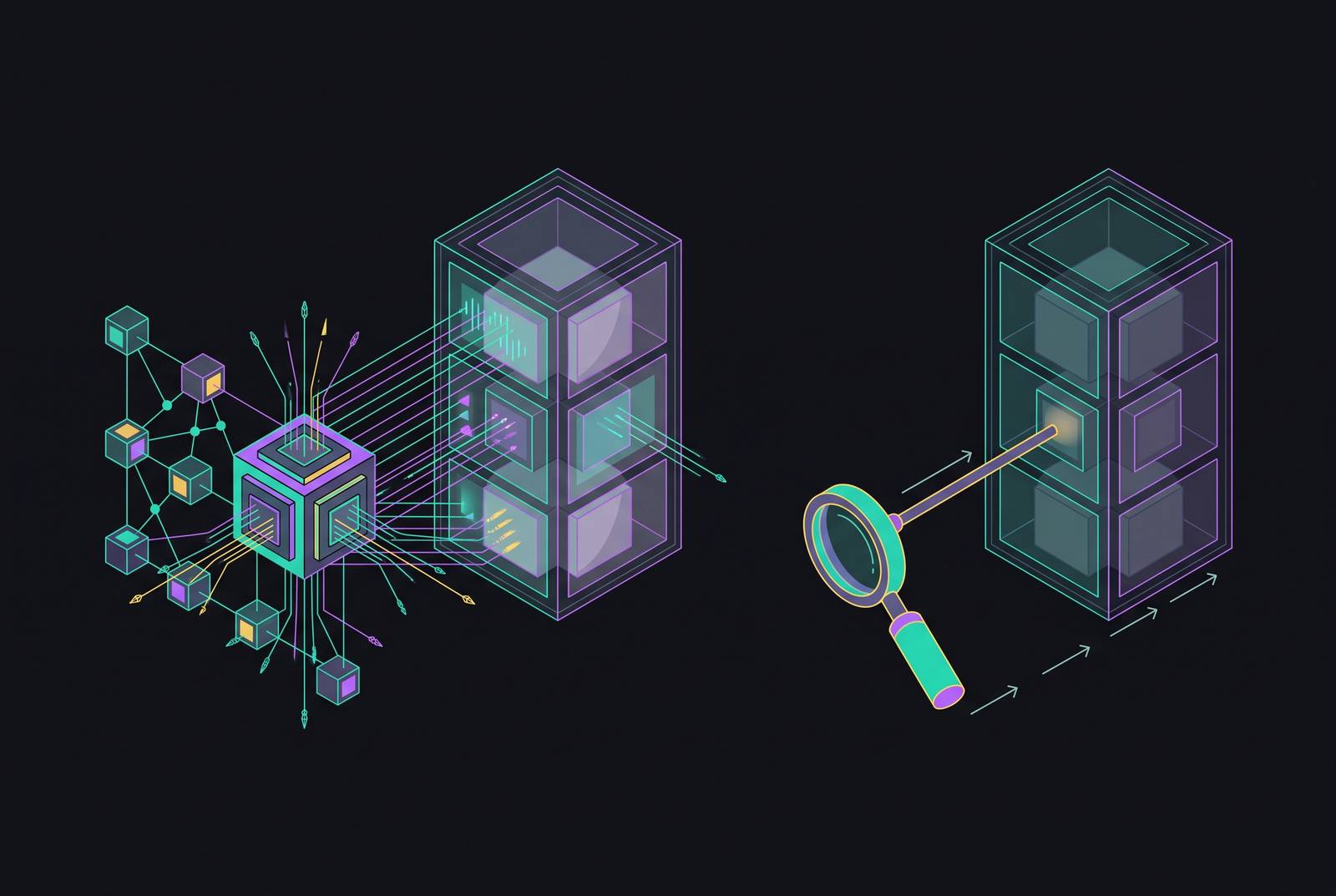
Given the same whitebox access a human tester would get, an AI-native engine can map the entire codebase, the cloud configuration, and the API surface simultaneously, at a scale no human team can match inside a fixed engagement window. And because the engine does not need a calendar slot to operate, it can keep testing as the codebase changes with each new deployment, closing the exposure window that calendar-driven annual testing leaves open. Autonomous here means the agent reasons and acts without waiting for a human to direct each step. It does not mean the output is ready to hand to an auditor without anyone checking it first, and that distinction drives the next section.
Why human review matters
The capability gains from AI-native testing come with failure modes serious enough that autonomous findings alone are not sufficient for high-stakes security decisions. SecureLayer7's 2026 research flags hallucination as a persistent problem: AI systems sometimes identify a vulnerability with full confidence that does not actually exist. The same research notes that without a senior pentester guiding the AI and interpreting what it produces, results can end up misleading or disconnected from actual business risk.
Business logic and authorization flaws compound the problem, because catching them requires understanding how an application is supposed to behave, not just what its code contains. Human testers still hold a clear advantage over current agents when it comes to that kind of contextual, abuse-case reasoning. AI systems also generate output probabilistically, which raises a structural issue. OffSec's 2026 analysis notes that AI-powered applications produce results based on probabilities, training data, and context, so the same test run against the same system can yield different results from one run to the next. That probabilistic behavior complicates reproducibility and makes validation harder than it is with deterministic traditional testing.
Then there is the question of who an auditor or an enterprise customer will actually believe. A finding produced entirely by an autonomous agent, with no certified human reviewer behind it, does not carry the same evidentiary weight as a finding a named expert has signed off on. Compliance frameworks and enterprise buyers still expect a human to stand behind the report.
Trace exemplifies this distinction by pairing AI agents with OSCP-certified human expert review on every finding, demonstrating that whitebox access without the right combination of autonomous discovery and credible human validation produces neither the speed nor the assurance modern technical buyers need. The design principle that follows is not a compromise between speed and credibility. You get both at once when AI-native coverage runs at machine speed and certified humans review every finding before it reaches a report.
The expanded AI attack surface and whitebox testing coverage in 2026
Organizations building AI capabilities into their products are not swapping out their existing attack surface for a new one. They are stacking a new surface on top of the old one, and both now need testing. OffSec's 2026 analysis identifies what that new surface looks like: large language models, RAG pipelines, AI copilots, autonomous agents, and machine learning models introduce attack vectors, prompt injection, model extraction, data poisoning, agentic tool abuse, that have no direct equivalent in traditional penetration testing methodology.
The traditional attack surface has not gone anywhere. SQL injection, XSS, SSRF, insecure deserialization, hardcoded secrets, and broken access control still appear in production systems constantly, and they still demand the same rigorous, exploit-proven approach that traditional whitebox testing was built around. Mindgard's 2026 comparison draws a clean line between the two categories of attack: traditional testing exploits technical vulnerabilities sitting in code and infrastructure, while AI system testing manipulates model behavior through inputs and context, targeting the decision-making process itself rather than the application code around it.
For a growth-stage SaaS company shipping AI features, that means the whitebox test scope has to explicitly name the foundation model, the system prompts, the RAG pipeline, the vector databases, agent memory, and any connected tool APIs, alongside the application layer that traditional testing already covers. A whitebox engagement that leaves out AI-specific test cases is incomplete for any product that has AI capabilities built into it, regardless of how thorough the rest of the engagement is.
A hybrid whitebox program for a growth-stage SaaS team
The strongest answer to everything laid out so far is a structured combination that assigns each approach to the work it does best, not a choice between AI-native and traditional whitebox testing. OX Security's 2026 research reaches the same conclusion: a resilient application security posture needs a hybrid strategy, one that combines continuous automated AI testing for pipeline velocity with manual human pentesting for the intricate business logic and social engineering risks that automation tends to miss.
In practice, that combination layers into the CI/CD pipeline at different points, and each point does a distinct job. Pull request scanning runs on every commit, so it catches exposed secrets, known vulnerability patterns, and infrastructure-as-code misconfigurations before they reach staging. Staging gates add a deeper layer of AI-driven exploit chaining, so they test whether minor issues combine into something exploitable before code gets promoted to production. Sitting above both of those is a periodic whitebox engagement, run annually or tied to major release milestones, where human experts review business logic, authorization flows, and the full attack surface, closing with a signed report and an attestation letter that an auditor or enterprise customer can actually rely on.
Platforms like Trace operate as truly AI-native engines: autonomous agents map the entire codebase and cloud configuration simultaneously, adapt their exploitation strategy when an initial path fails, and keep running continuously as code changes, rather than treating security as a once-a-year snapshot. Continuous pull-request scanning paired with on-demand retesting closes the exposure window that annual-only testing leaves open, so teams no longer have to wait for the next scheduled engagement to find out whether a new deployment introduced a problem. For a growth-stage SaaS team, that layered structure is what turns whitebox testing from a point-in-time compliance exercise into an ongoing part of how code ships.
Evaluating a whitebox penetration testing vendor against this framework
Everything above adds up to a concrete set of questions you can put to any vendor claiming to offer whitebox penetration testing, and the answers show you whether that label reflects real coverage or just an automated scan wearing whitebox branding. Start with who is actually doing the work: ask for the named testers and their certifications, and weigh OSCP specifically, since it requires demonstrated hands-on exploitation skill in a way that CISSP or CEH, both management and knowledge credentials, do not. Ask how every finding gets validated before it reaches the report, since an autonomous agent's output with no human review behind it is not ready for an auditor's desk. Ask whether every vulnerability comes with a working exploit, because if a risk has no working proof of concept, you cannot prioritize it with any confidence. Ask whether the vendor has direct access to source code, cloud configurations, and documentation, or whether the engagement only ever touches the running application from the outside, because that distinction is the whole difference between whitebox and black-box in practice. Ask whether retesting is included, and whether it covers every finding with no time limit attached. And ask whether you can get continuous scanning between the scheduled point-in-time engagements, or whether the exposure window simply reopens the day the report gets delivered.
A few signals point in the other direction too. Per-unit pricing based on scope size is one: genuine manual testing does not scale linearly with the size of the scope, so pricing that way usually signals automated scanner output being sold at pen-test prices. A timeline too short for real manual review of business logic across the stated scope is another, because that kind of review takes time no matter how fast the automated layer runs. And any vendor promising a clean report in advance should be treated with real skepticism. This is precisely why AI-native penetration testing platforms like Trace mandate certified human expert review before any finding reaches a customer or auditor: the human reviewer catches false positives, contextualizes business logic flaws, and signs off on exploitability in a way that makes findings credible for compliance purposes. A buyer who asks these questions before signing anything will come away with a materially stronger security outcome than one who picks a vendor on price or name recognition alone.