How AI-Assisted Pen Testing Differs from Automated Vulnerability Scanning
AI-assisted testing reasons about attack chains; scanning only flags known vulnerabilities.
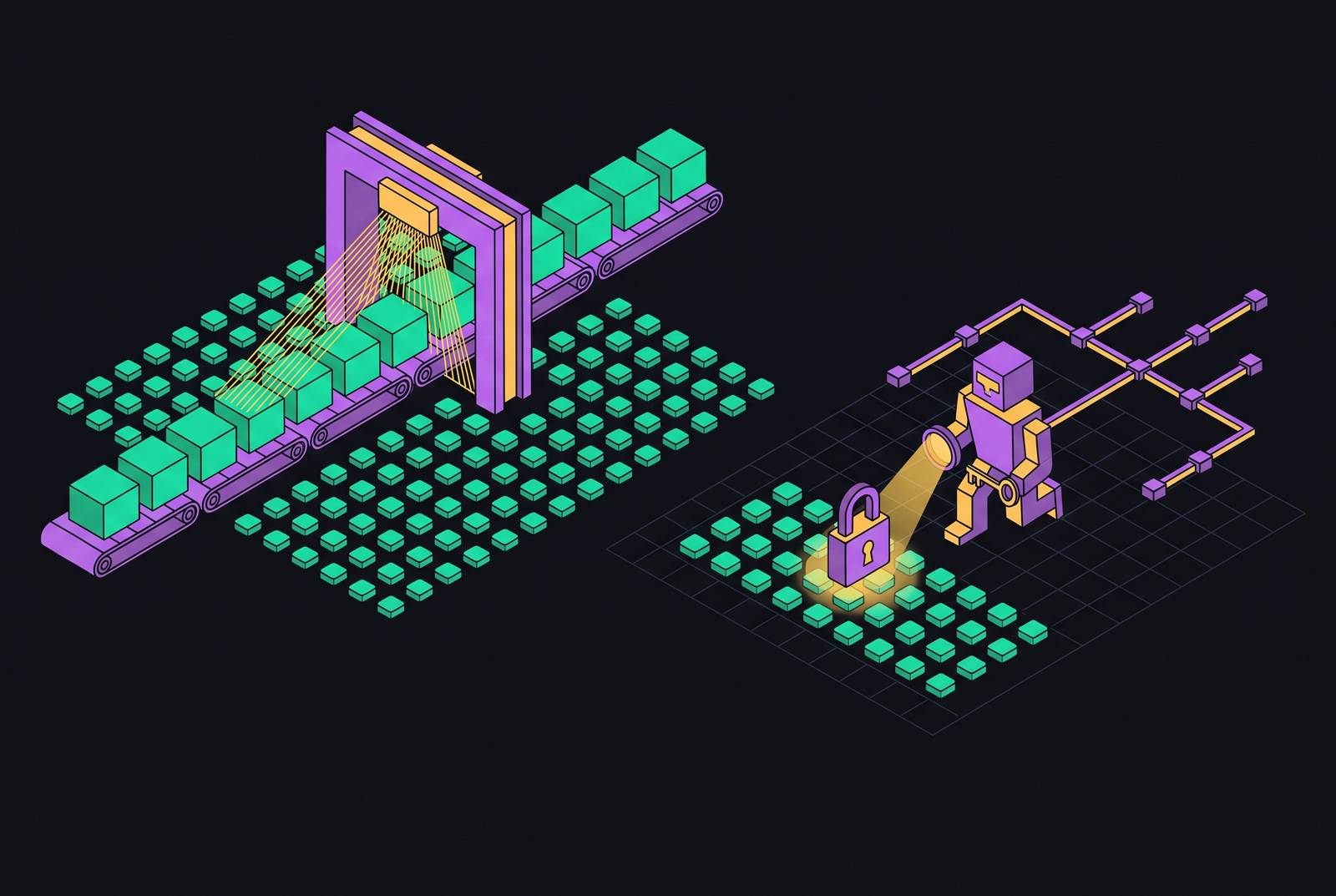
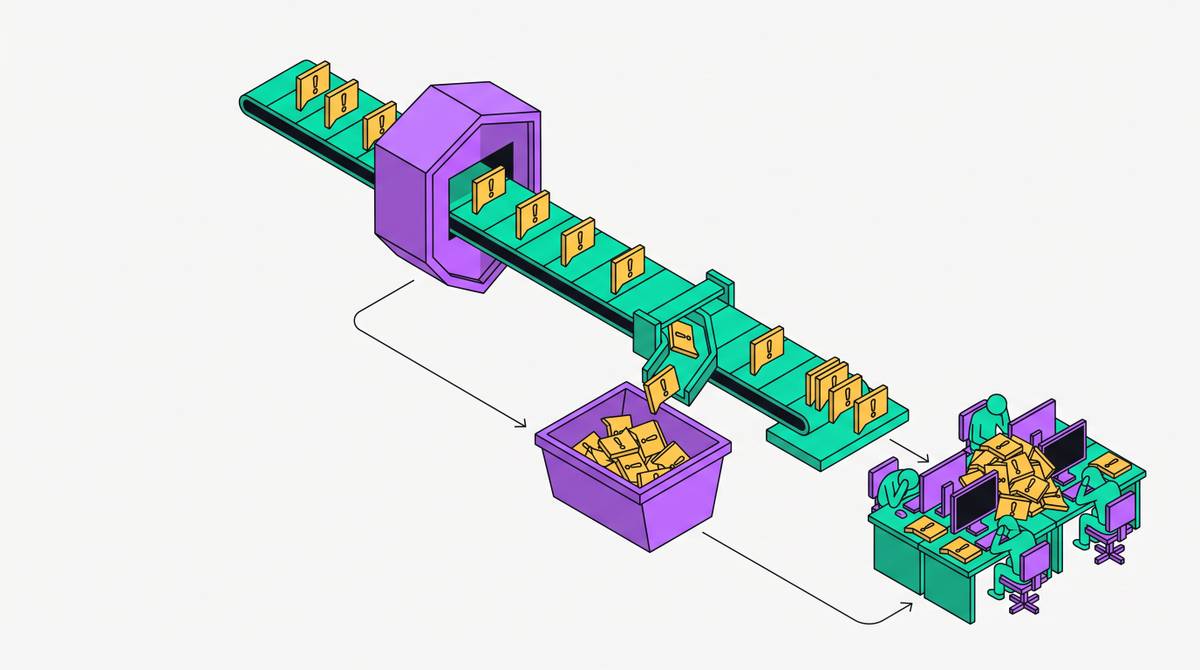
Scanners work by comparison. They observe your environment, check what they find against a catalogue of known conditions, and flag matches. When nothing matches, they pass. The entire model depends on that catalogue being comprehensive enough to capture what actually threatens your specific environment. It never is.
In 2025, 48,185 CVEs were published, a 21 percent increase over 2024. The known-vulnerability list is not stabilizing; it is accelerating. Scanning keeps pace with catalogue updates. What it cannot do, structurally, is get ahead of them. The moment a novel attack technique emerges, or a business logic flaw appears that was never enumerated because it was unique to your application's architecture, the scanner has nothing to match against. It returns clean. The flaw remains.
That's the false negative problem, and it's the harder one to see. Organizations fixate on false positives because those are visible and irritating: flags on conditions that aren't actually exploitable, inflating the remediation queue, eroding trust in results. False negatives are pernicious precisely because silence reads as safety. You never see what the scanner didn't find.
Here's where it breaks down practically. A scanner will identify a parameter that resembles a known injection point and flag it. What it cannot do is reason about whether that parameter sits behind an authentication layer, how it connects to downstream services, whether a low-privilege user can reach it from a mobile endpoint, or whether chaining it with two other low-severity findings opens a path to customer records. The scanner found a condition. It did not find an attack path. Those are categorically different outputs.
Business logic flaws live in this gap entirely. Complex authorization bypasses, context-dependent misconfigurations, emergent behavior when two individually benign conditions interact: none of these have CVE numbers. None of them will surface by running more scans or upgrading scanning tooling. The ceiling isn't operational. It's architectural. It's inherent to what pattern-matching is.
What AI-assisted testing can do that scanning cannot
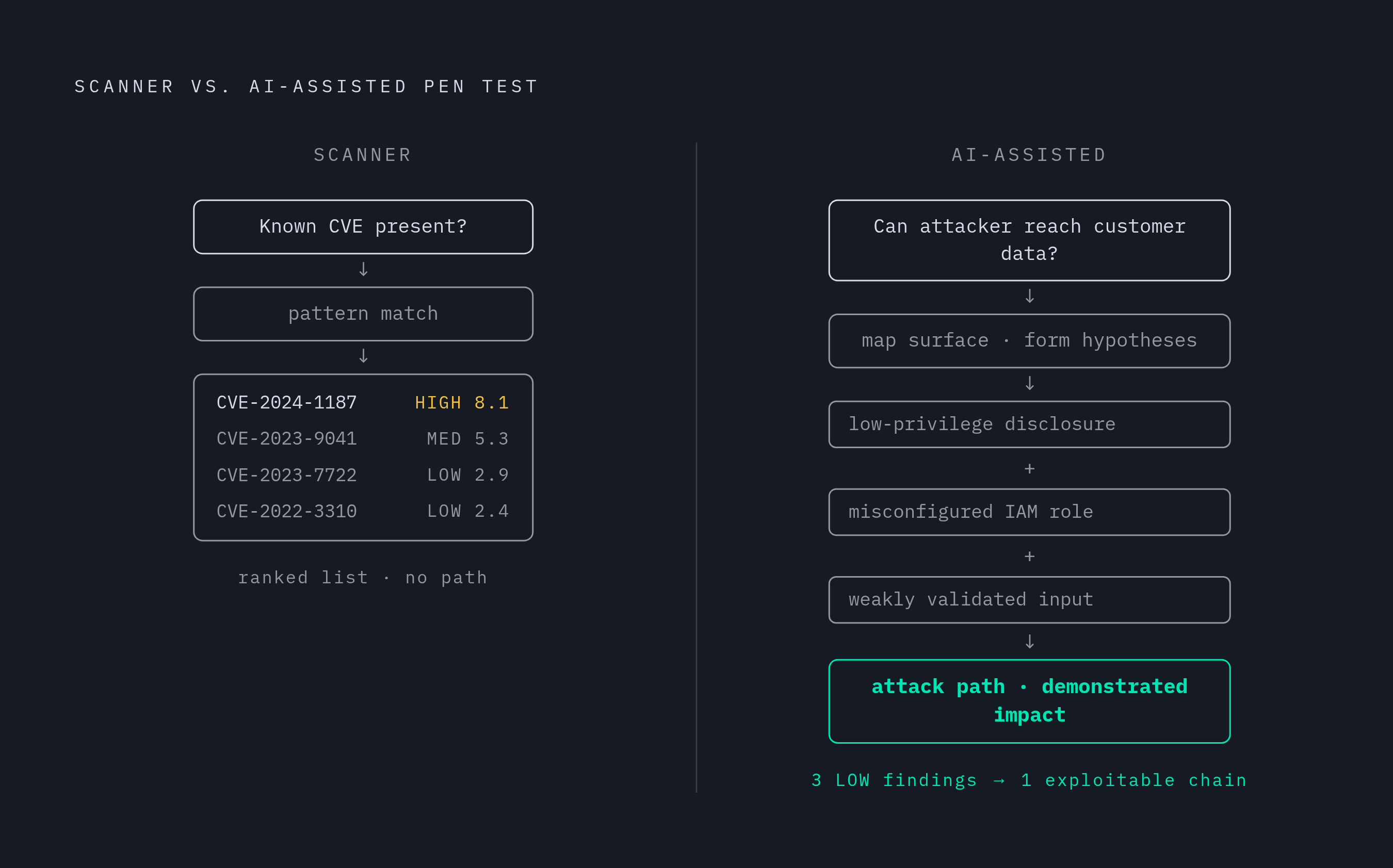
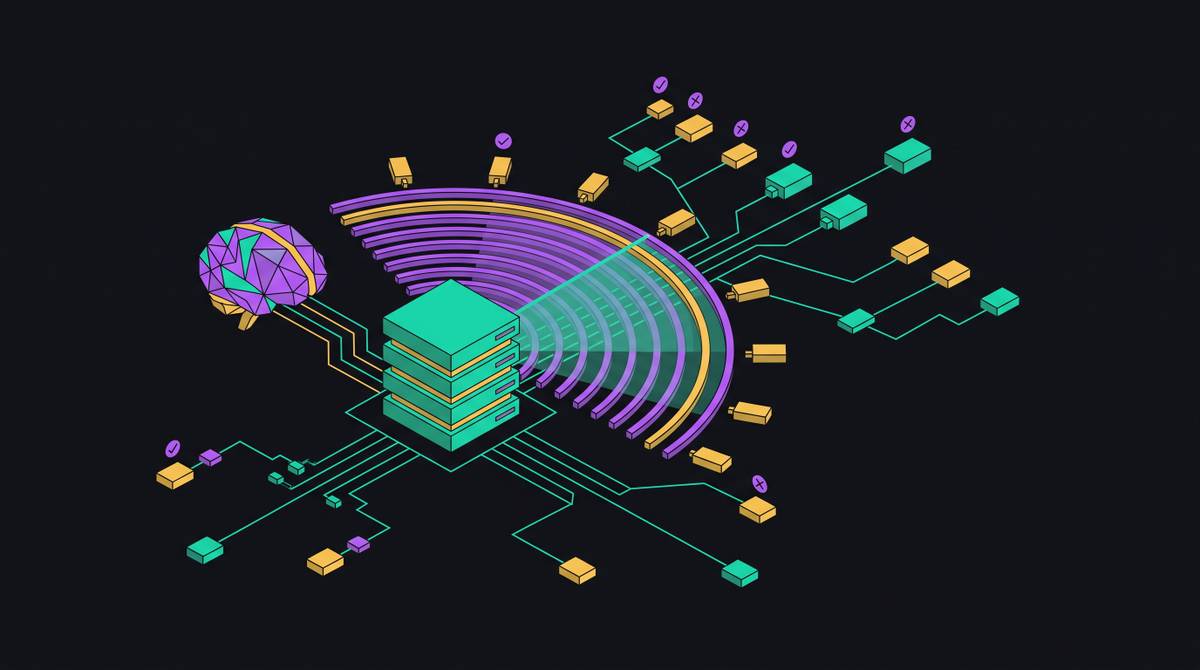
The operative word in AI-assisted pen testing is reasoning. The system doesn't check your environment against a list. It maps your attack surface, forms hypotheses about what an attacker can accomplish, tests those hypotheses, incorporates what it learns, and adjusts. That feedback loop is what makes it categorically different from scanning, and it's also what makes it expensive to do credibly.
At scale, the attack surface mapping alone changes the calculus. An AI-assisted system can ingest source code, cloud configurations, API routes, and documentation simultaneously, covering ground no human team can walk manually within a practical timeframe. Modern application environments are genuinely sprawling: microservices, third-party integrations, infrastructure-as-code, identity layers stacked on identity layers. A human tester working manually will prioritize, which means they will also miss things. Not because they're careless, but because time has a hard edge.
Finding chaining is where the real value surfaces, and this is the part I'd push any buyer to understand before evaluating a vendor. A low-privilege information disclosure finding, taken alone, gets triaged low and deprioritized. A misconfigured IAM role, taken alone, gets queued. A weakly validated input field is a single data point. An AI-assisted system can correlate all three, reason about whether they compose into an exploitable path, and surface that attack chain as a single finding with demonstrated impact. That output is not incrementally better than a CVE list. It's a different thing entirely.
What enables this is context-awareness: reasoning about what an endpoint does, who can reach it, and what it touches downstream, not just whether it resembles a known-bad pattern. When a test step returns unexpected output, the system adjusts its next move based on what it just learned. That's closer to how a skilled tester actually thinks.
There's also a supply-side pressure worth naming directly. AI coding tools are generating more endpoints, API routes, and application logic per sprint than was possible two years ago. The attack surface is expanding faster than security teams can manually test it. AI-assisted testing is, in part, a direct response to AI-generated attack surface. That's not marketing language; it's a structural reality shaping how security programs have to operate now.
One caveat that matters: fully autonomous, hands-off AI testing hasn't arrived in any credible form. Existing approaches still require meaningful human intervention. A certified expert reading the output, understanding whether a finding matters in your specific business context, and signing off before results reach auditors or customers isn't a workaround around the technology's limitations. That human judgment is where the credibility of the engagement actually lives.
Where the two tools belong in a security program — and where they don't
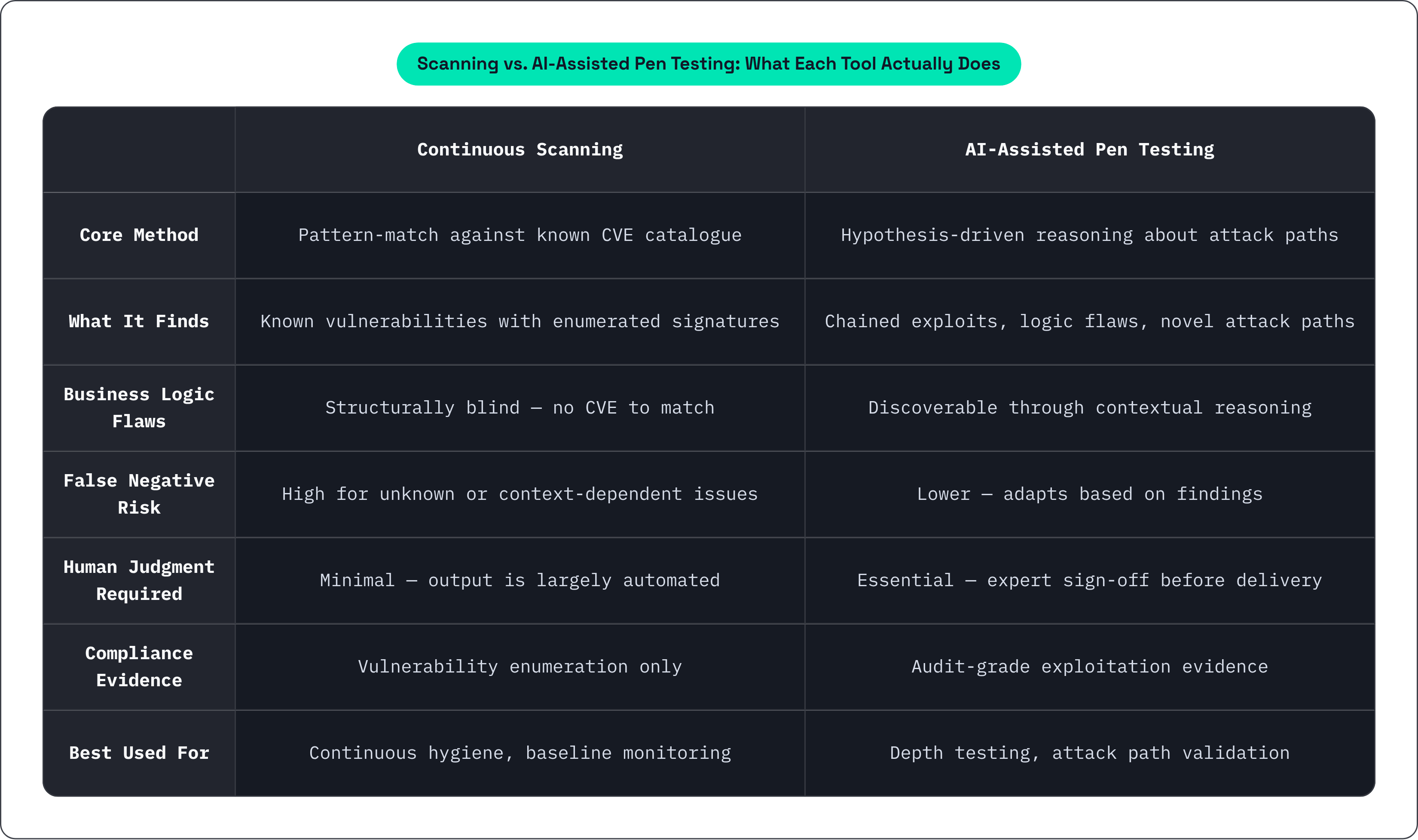
Scanning is not inferior to AI-assisted pen testing. It answers a different question, and it answers that question well. "Do we have any known conditions present right now?" is a legitimate, recurring operational question. Continuous hygiene monitoring, catching known CVEs in dependencies, verifying that a patched condition is actually resolved, establishing a baseline before a deeper engagement: scanning is genuinely useful for all of it.
What scanning should never be used to answer: "Are we secure?" "Can an attacker reach our customer data?" "Would this hold up against a real adversary?" Those questions require reasoning about exploitability, context, and attack paths. Scanning cannot provide that. Presenting a scan report in answer to those questions isn't a conservative choice. It's a wrong answer delivered with formatting.
Compliance context makes this sharper. SOC 2, HIPAA, and ISO 27001 frameworks require penetration testing as a control because they expect evidence of an exploitation attempt, not vulnerability enumeration. Auditors who know their work will distinguish between a scan report and a pen test report. Submitting one as the other isn't just inadequate; it's a liability.
A mature program looks like this: continuous scanning as the operational pulse, catching known issues in near-real-time; AI-assisted pen testing with human expert sign-off for depth, attack path validation, and audit-grade evidence; structured retesting after remediation to confirm the fix actually closed the path. Each layer answers a different question. None of them substitutes for the others.
On the pace problem: roughly 40 percent of organizations report that pen test results are materially outdated by the time the report is delivered. Environments change that fast. The answer isn't just better point-in-time tests. It's continuous coverage as a baseline expectation, with point-in-time depth engagements layered on top.
How to tell which one a vendor is actually selling
The market has a labeling problem, and it's gotten worse. Vendors are calling automated scans "AI pen tests." They're calling AI-assisted tests "next-gen scanning." The label on the proposal doesn't settle the question. You have to ask.
Start with the methodology question. What percentage of this engagement is manual or expert-guided versus automated? Vendors who respond by naming tools, Nessus, Qualys, Burp Suite, without describing a manual methodology alongside those tools, are probably scanner-heavy regardless of what they're calling the service. Tool names are not a methodology.
Ask to see a sample report from a comparable engagement. Does it show how findings were chained into attack paths, with evidence of exploitation and reasoning about what an attacker can actually accomplish? Or is it a ranked list of CVE identifiers with severity scores? The structure of the output reveals the nature of the process that produced it more reliably than any pitch deck.
Ask which specific standard the team follows. A credible answer names something with a version: OWASP WSTG, OWASP API Security Top 10 (2023), PTES, NIST SP 800-115. "Industry best practices" without a named framework is not an answer. It's a placeholder.
Price is a reliable signal. Expert human review has a cost floor that doesn't compress. If a proposal prices a penetration test at the low end of the market, with no scoping call, minimal back-and-forth, and a 48-hour turnaround, it is almost certainly a scan delivered under a different name.
Three specific things should stop you cold. First: "we use AI" offered as the complete capability description, with no explanation of what the AI validates, in what environment, with what evidence, and who reviews and signs off before the report is issued. Second: findings with no proof of exploitability. If the report cannot demonstrate a working exploit for each critical finding, it is flagging conditions, not confirming vulnerabilities. Third: no retesting built into the engagement scope. Vendors who leave retesting out are implicitly signaling that they don't expect you to act on findings, which raises an uncomfortable question about whether the findings were chosen to warrant action in the first place.
"AI-assisted" is the accurate claim when AI drives reasoning, coverage, and attack path construction, and a certified human expert owns the findings and signs off before delivery. When a scanner adds a machine-learning layer to pattern matching and calls it a penetration test, that is a marketing decision, not a capability description. Ask the question directly. Any vendor worth working with will welcome it.